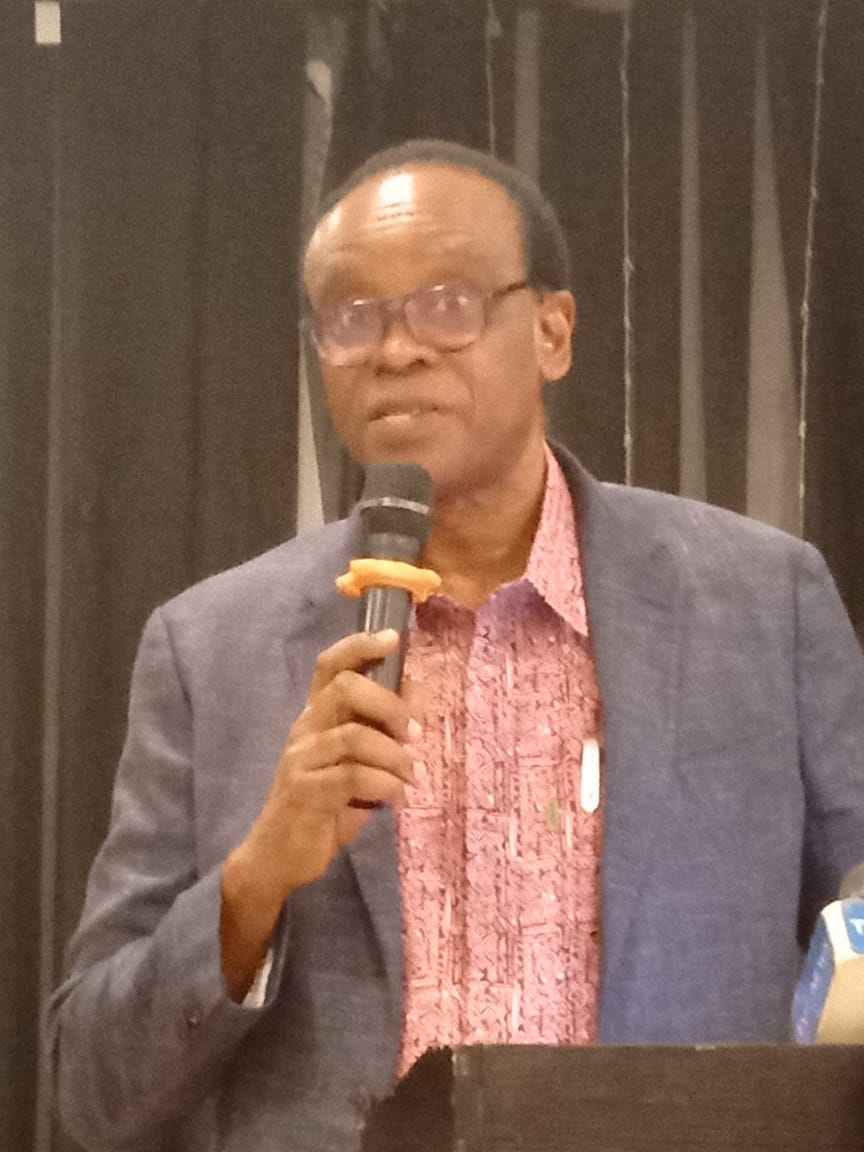
Environmental activist, Dr. Nnimmo Bassey, has lamented that the persistent environmental pollution and degradation in the Niger Delta region have become heavily politicised, thereby hindering genuine efforts toward remediation and justice for affected communities.
Bassey stated this during the opening ceremony of the Correspondents Chapel 2026 Press Week held at the Banquet Hall of Hotel Presidential, Port Harcourt, where he delivered the keynote address as Guest Speaker. The event had as its theme: “The Imperatives of Comprehensive Cleanup of the Niger Delta: Role of the Media.”
Speaking at the event, Bassey blamed decades of environmental destruction on oil exploration activities, gas flaring, and government inaction, noting that the crisis dates back to the colonial era. According to him, successive governments have failed to confront the realities in the Niger Delta, especially in addressing gas flaring, oil spills, and environmental pollution.
He stressed that over 70 years of oil extraction in Nigeria had brought more hardship than economic prosperity to host communities, insisting that cleanup efforts would remain meaningless if pollution and gas flaring were not first stopped.
“The challenge is beyond throwing money at the problem. If pollution is not stopped, then the cleanup of the Niger Delta is meaningless,” he said.
Bassey further described the Niger Delta as one of the most polluted regions in the world, citing alarming health implications for residents. According to him, statistics indicate that life expectancy in the Niger Delta averages 41 years due to environmental pollution, compared to the national average of 56 years for women and 53 years for men.
He also lamented that several reports and recommendations aimed at reducing pollution in the region had been ignored because of politics, neglect, lack of accountability, and irresponsibility.
Referring to past environmental reports, Bassey noted that findings from investigations conducted between 1991 and 1997 were never made public. He cited the Ogoni environmental report, which revealed that groundwater pollution extended as deep as nine metres, while the Bayelsa report described the situation as “environmental genocide” caused by systemic neglect, prolonged oil spills, and continuous gas flaring.
He further highlighted ongoing incidents such as the Okrika oil well fire, which he said had been burning since 2024, and the Bille oil field, where gas flaring and oil burning have reportedly continued day and night since 1984.
Describing the environmental crisis as an “ecological battlefield,” Bassey listed exploitation, expropriation, extraction, and extermination as the defining realities confronting communities in the Niger Delta.
“We have our waters and lands polluted, and naturally life expectancy will continue to decline,” he added.
Bassey urged the media to intensify investigative reporting on environmental abuses in the region, emphasizing that journalists have a responsibility to expose oil companies responsible for pollution and oil spills.
He advised media practitioners to remain impartial while serving as a bridge between affected communities and oil companies, noting that polluters often attempt to manipulate public perception and avoid accountability.
The environmentalist also called on the Federal Government to declare a state of emergency on environmental pollution in the Niger Delta, warning that continued silence on the matter would be disastrous.
Quoting late environmental activist Ken Saro-Wiwa, Bassey said remaining silent in the face of ecological destruction was “suicidal,” especially as some oil wells in the region had reportedly been burning uncontrollably for several years.
He further advocated the proper utilization of ecological funds to address environmental damage in affected communities, insisting that ending gas flaring and pollution should take priority over cleanup campaigns alone.