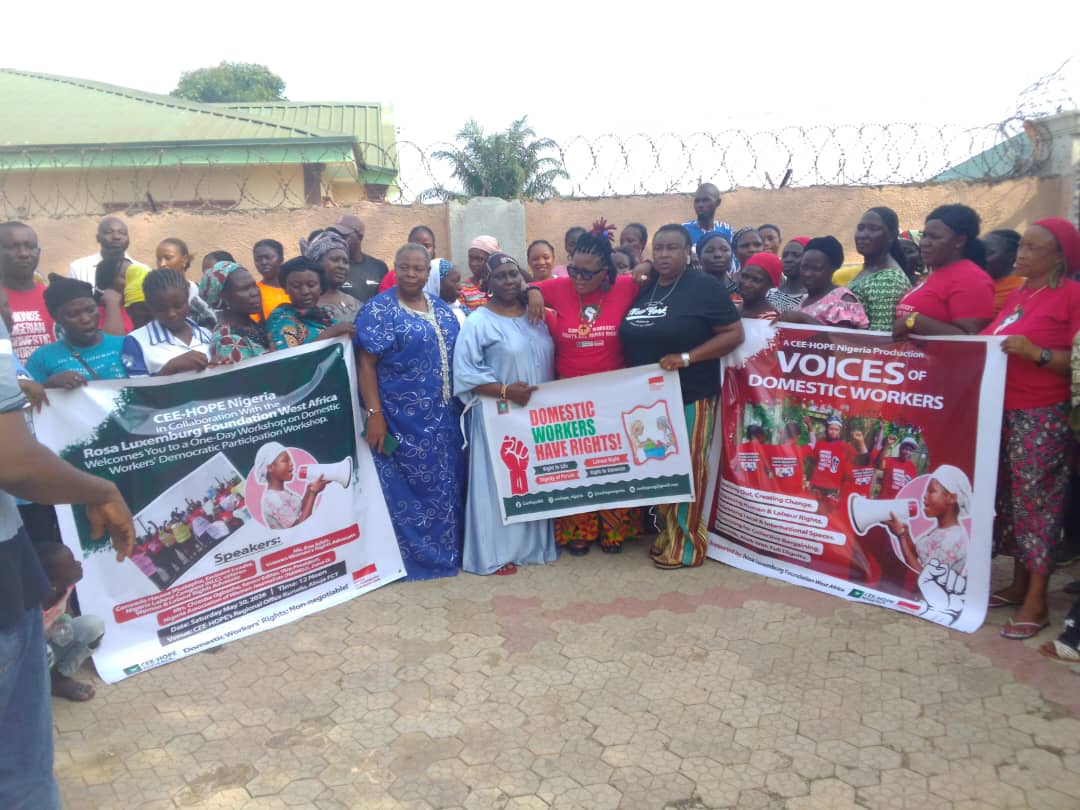
Domestic workers in Nigeria have renewed calls for legal protection, unionization, fair wages, and greater political inclusion ahead of the 2027 general elections.
The demands were made during a one-day Democratic Participation Workshop organized by CEE-HOPE Nigeria in partnership with the Rosa Luxemburg Foundation West Africa at the organization’s regional office in Kurudu, Abuja.
The workshop brought together domestic workers, labour-rights advocates, development practitioners, journalists, clerics, and civil society organizations to discuss strategies for improving the participation of domestic workers in Nigeria’s democratic and governance processes.
Speaking at the event, development practitioner and labour-rights advocate, Hauwa Mustapha, emphasized the importance of democratic participation, describing democracy as a government “of the people, by the people, and for the people.”
She urged domestic workers to actively engage in governance by understanding public issues, participating in elections, and holding elected leaders accountable.
According to her, citizens should not wait for politicians to seek their support before making demands for good governance.
“People should know what is happening in government, understand public issues, and make informed decisions about who becomes their leader,” she said.
Mustapha also encouraged domestic workers to understand their constitutional rights and responsibilities, stressing that active participation in democratic processes would help ensure their interests are represented.
Also speaking, trauma-care specialist and rights advocate, Ene Edeh, highlighted the challenges faced by domestic workers, particularly women and young girls who are often exposed to exploitation, abuse, discrimination, and poor working conditions.
She called for stronger advocacy, increased public awareness, and policy reforms aimed at protecting domestic workers and safeguarding their dignity and welfare.
Edeh stressed the need for stakeholders to prioritize the safety, mental well-being, and economic empowerment of domestic workers, noting that many continue to suffer in silence due to inadequate legal protection and weak social support systems.
In her remarks, Mrs. Chizoba Ogbeche, Senior Editor and Vice President of the Nigeria Association of Women Journalists (NAWOJ), Zone D, reaffirmed the media’s commitment to amplifying the voices of vulnerable workers and promoting advocacy for domestic workers nationwide.
She urged domestic workers to maintain professionalism, honesty, and integrity in their relationships with employers, adding that mutual respect and accountability remain essential for healthy working environments.
Cleric Wilson Idoko also addressed participants, emphasizing the importance of knowledge, personal development, and good character.
Drawing from biblical teachings, he said lack of knowledge often limits opportunities and progress, encouraging domestic workers to educate themselves about their rights and opportunities for growth.
He further advised them to uphold values such as honesty, diligence, love, and integrity, describing good character as critical to long-term success.
The workshop forms part of ongoing advocacy efforts by CEE-HOPE Nigeria to advance the rights and welfare of domestic workers across the country.
Founded by journalist and child-rights advocate Betty Abah, the organization has consistently championed the rights of women, children, and marginalized communities through advocacy, education, protection, and empowerment initiatives.
Stakeholders at the event observed that many domestic workers in Nigeria still operate without written contracts, legal protection, social security benefits, or effective access to justice.
The organization has continued to advocate stronger legal frameworks to address issues including unpaid wages, workplace abuse, forced labour, sexual exploitation, and child labour.
Participants stressed that as Nigeria approaches the 2027 elections, domestic workers must not remain excluded from democratic participation and decision-making processes.
They called for increased political awareness, voter education, leadership development, and civic engagement among domestic workers to ensure that labour and social protection policies reflect their realities and aspirations.
The workshop ended with renewed commitments from participants and stakeholders to strengthen workers’ associations, expand access to education and vocational training, and deepen advocacy for the rights and inclusion of domestic workers in Nigeria.
Participants unanimously maintained that the rights and dignity of domestic workers must remain a priority in Nigeria’s pursuit of social justice, inclusive governance, and sustainable development.