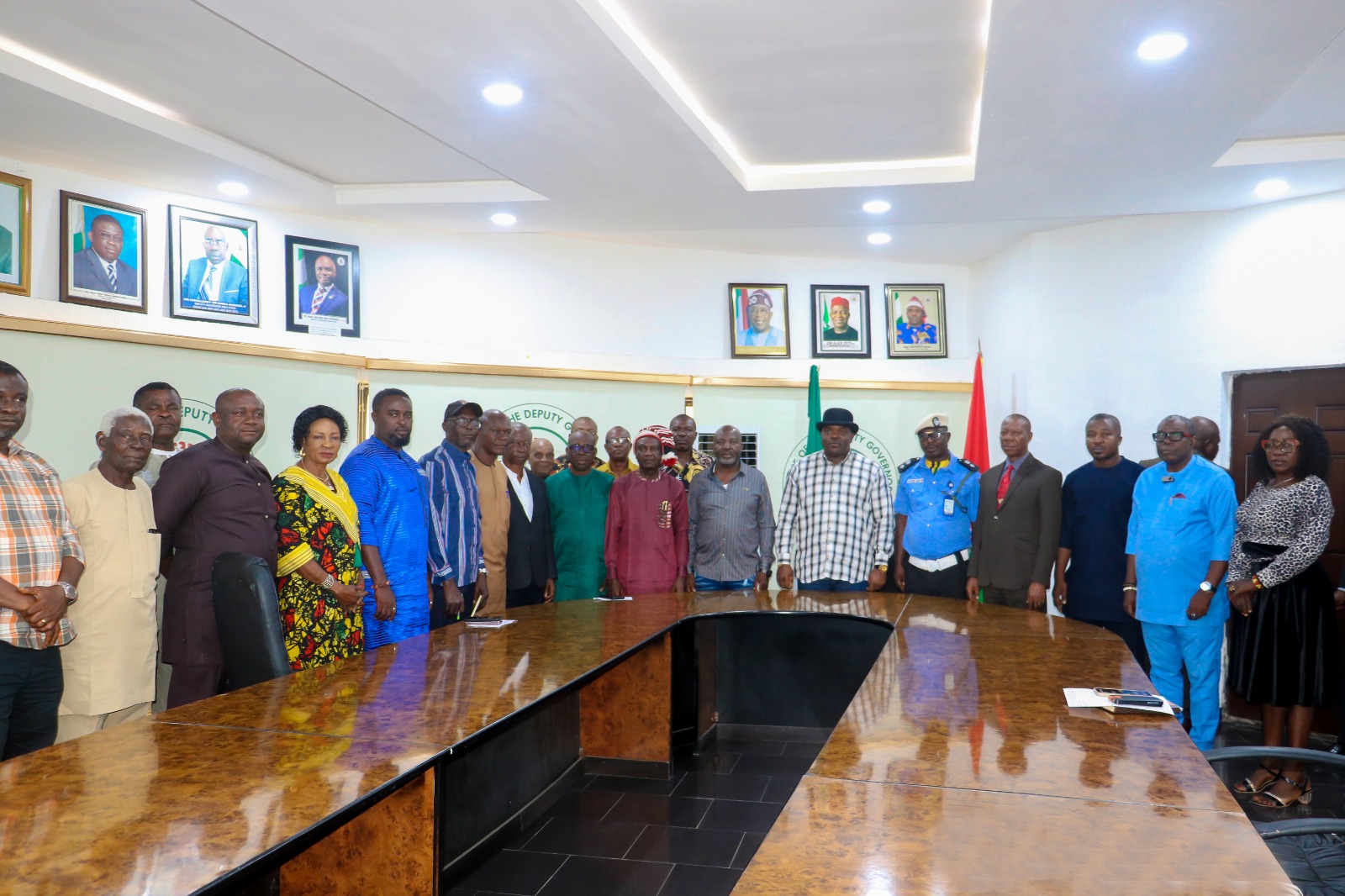
The Abia State Deputy Governor and Chairman of the State Boundary Committee, Engr. Ikechukwu Emetu, has reaffirmed that the committee resolves boundary and land disputes strictly based on verifiable records, historical documents, and court judgments.
Engr. Emetu made this known during a conciliatory meeting between Ebem Village in Ohafia Local Government Area and Ozu Abam Community in Arochukwu Local Government Area. The meeting was held at the Conference Room of the Office of the Deputy Governor, Government House, Umuahia.
According to him, the Boundary Committee remains committed to ensuring fairness and lasting peace by relying on facts and legally recognised documents in determining the rightful ownership of disputed lands.
“We deal with facts, documents, and court judgments in determining the true owners of disputed lands,” the Deputy Governor stated, while urging both parties to embrace dialogue and peaceful coexistence.
He explained that the state government would continue to encourage reconciliation and lawful resolution of disputes rather than violence or self-help.
Speaking on behalf of the Ebem community, Barrister Anaga Kalu and Mr. Idika Ike Onwuka alleged that renewed encroachment on the disputed land by some individuals had heightened tension in recent years despite previous government interventions and ongoing reconciliation efforts.
The representatives of the Ebem community traced the dispute to a colonial court judgment delivered in 1932, which they said was upheld by the Provincial Appeal Court in Calabar in 1934, leading to the demarcation of the boundary with beacons.
They maintained that the community had consistently adopted peaceful approaches by reporting the matter to government authorities and security agencies instead of resorting to violence.
Speaking for Ozu Abam Community, Mr. Orji Udo Igwe said the community’s leadership remained committed to a peaceful settlement of the dispute and had already initiated local reconciliation mechanisms before the matter was brought before the state government.
He added that the community’s traditional rulers, elders, women, and youth groups were united in their desire for peace and mutual understanding.
The meeting ended with renewed calls for restraint and cooperation from both communities as the state government intensifies efforts to achieve a lasting resolution of the dispute.