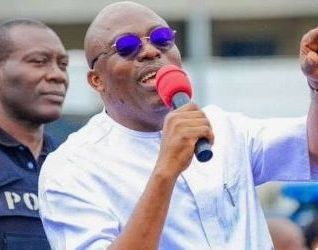
As President Bola Ahmed Tinubu and Rivers State Governor Siminalayi Fubara mark three years in office, their performances continue to attract mixed reactions from Nigerians, with supporters highlighting achievements recorded by both administrations, while critics point to persistent economic hardship, insecurity, and political challenges.
The anniversary has provided an opportunity for citizens, stakeholders, and public affairs commentators to assess the impact of the policies and programmes implemented by the two leaders since assuming office. While some observers believe progress has been made in certain sectors, others argue that the realities facing ordinary Nigerians have overshadowed any notable gains.
In Rivers State, opinions remain sharply divided over Governor Fubara’s performance, particularly in light of the prolonged political crisis that has dominated the state’s political landscape and affected governance. At the national level, many Nigerians continue to evaluate President Tinubu’s administration based on its handling of key issues such as economic reforms, security, and citizens’ welfare.
Speaking on the development, Chairman of the Defence for Human Rights and Democracy, Clifford Solomon, said it would be unfair to conclude that Governor Fubara has underperformed, considering the difficult political circumstances under which his administration has operated.
According to Solomon, the prolonged political crisis in Rivers State has significantly hindered the government’s ability to function optimally and effectively implement its developmental agenda. He noted that persistent political disputes and distractions have affected governance and slowed the execution of programmes intended to benefit residents of the state.
While acknowledging that the governor should accept responsibility in areas where his administration may not have met public expectations, Solomon maintained that the prevailing political tension remains a major obstacle to effective governance.
“Governor Fubara has been operating in a challenging political environment. The prolonged crisis has undoubtedly affected governance and limited the administration’s ability to fully deliver on some of its objectives. While there may be areas where improvements are needed, it would be unfair to ignore the impact of the political instability that has persisted in the state,” he said.
Commenting on President Tinubu’s administration, Solomon expressed concern over the current state of the nation, arguing that many Nigerians have continued to face severe economic hardship and security challenges since the President assumed office.
“At the federal level, immediately the President assumed office, Nigerians began to experience unprecedented hardship. Insecurity remains a major concern, with cases of kidnapping and attacks continuing across different parts of the country. Many citizens can barely afford basic necessities of life. We keep hearing about the Renewed Hope Agenda, but many people are asking where that hope is. What Nigerians are experiencing today is increasing poverty, hardship, and insecurity,” Solomon stated.
Also speaking, Port Harcourt-based legal practitioner Soseliprim Long Williams said that although the Tinubu administration may have recorded some achievements, many Nigerians are yet to feel the full benefits of the government’s reforms and economic policies.
Williams acknowledged that certain policy initiatives could yield positive results in the long term but argued that the immediate realities confronting citizens have overshadowed those achievements.
“Some achievements may have been recorded in favour of the President. However, when you weigh those achievements against the shortcomings, many people believe the failures outweigh the successes. The security situation appears to be deteriorating, and criminal elements seem increasingly emboldened. It is a very sad situation,” he said.
The legal practitioner further lamented the state of the economy, noting that rising inflation, increasing living costs, and declining purchasing power have made life difficult for many Nigerians.
“The economy is nothing to write home about. Many Nigerians are struggling to survive, and there is a growing perception that the government is not doing enough to protect citizens from the prevailing hardship. When discussions on insecurity begin to focus on prayer and fasting, people naturally begin to question whether enough practical measures are being taken to address the problem,” Williams added.
As both President Tinubu and Governor Fubara celebrate their third anniversary in office, public opinion remains divided over their records. While supporters point to reforms, infrastructure projects, and policy initiatives as evidence of progress, critics insist that much more needs to be done to tackle insecurity, improve economic conditions, and deliver meaningful benefits to citizens.
With two years remaining in their current terms, many Nigerians will be closely watching to see whether the promises and policies of both administrations translate into tangible improvements in governance, economic stability, and quality of life. The years ahead are expected to provide a clearer picture of the lasting impact of their leadership and the effectiveness of the reforms they have pursued since assuming office.