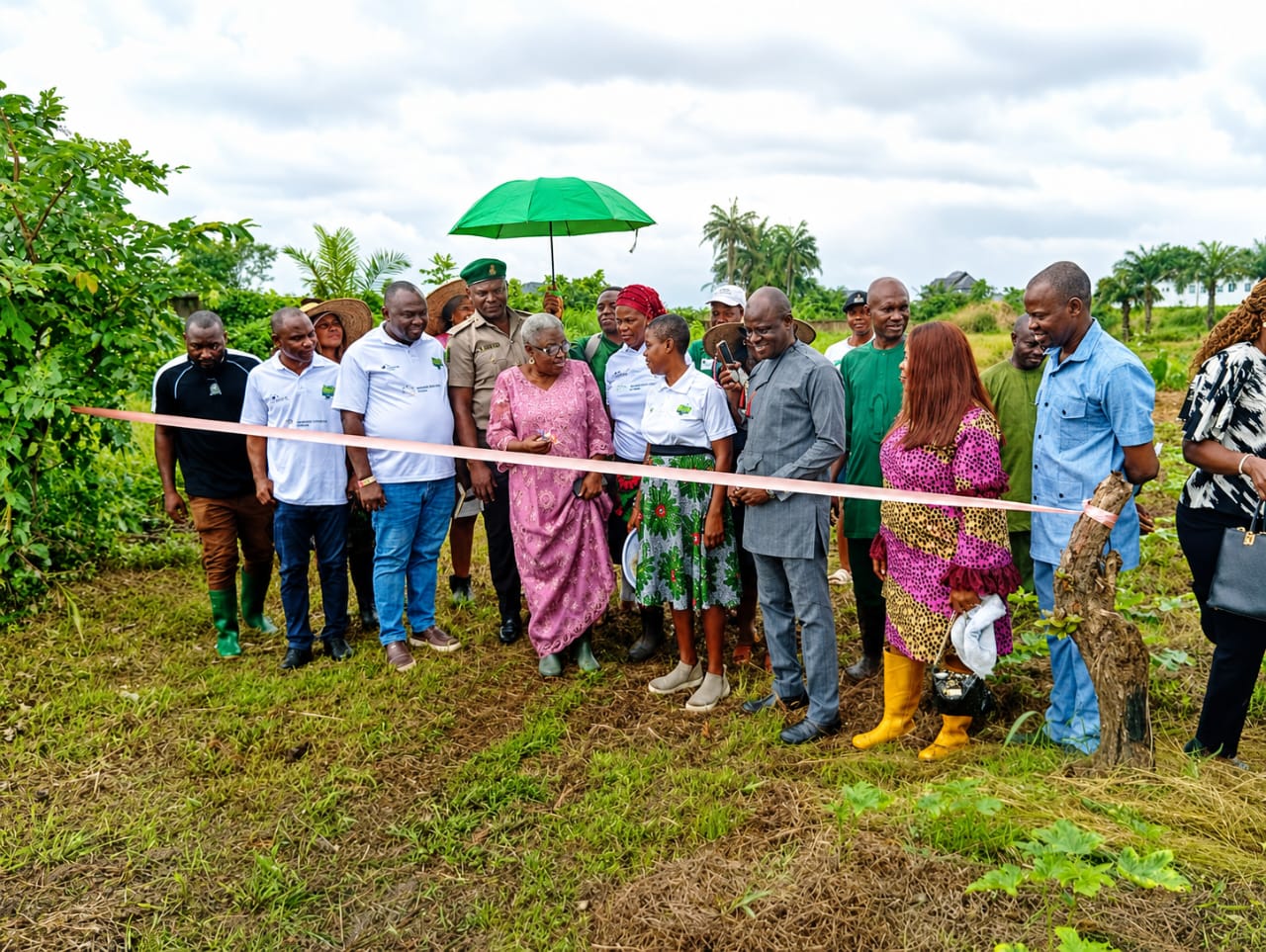
The Association of Organic Agriculture Practitioners of Nigeria (NOAN), Nnamdi Azikiwe University (UNIZIK), Awka, and the Anambra State Government, have strengthened efforts to promote organic agriculture and sustainable food systems with the inauguration of an Agroecology Centre of Excellence (ACE) and the launch of the Anambra State “Ugbo-Ndu” Participatory Guarantee System group.
The initiatives, inaugurated at UNIZIK, are expected to boost research, farmer training, organic food verification, food traceability, technology transfer and market access, while creating practical opportunities for students and young agripreneurs.
The event, organised yesterday by UNIZIK’s Institute of Organic Agriculture, Agroecology and Sustainability (IOAS), in collaboration with NOAN, Healthy Foods for Consumers Initiative (HeFci) and Food Soldiers, with support from Agroecology Fund, was themed; “Right to Food Traceability.”
Speaking through the Deputy Vice-Chancellor (Administration), Prof. Hilda Ewosiida Osisioma, the Vice-Chancellor, Prof. Ugochukwu Bond Stanley Anyaehie, commended the initiative, saying it would strengthen the university’s contribution to research, innovation and sustainable agriculture.
Representing the Anambra State Commissioner for Agriculture, Dr. Ben Chuks Odoemena, the Permanent Secretary, Ministry of Agriculture, Mrs. Chinyere Nwabachili, said the initiative aligned with Governor Chukwuma Charles Soludo’s vision of building a smart, prosperous and economically viable state.
She said the government was prioritising the commercialisation of agriculture to improve food production, farmers’ livelihoods and food security.
The NOAN President, Prof. Olatunji Olayinka Marcus, represented by Dr. Rose Kanu, described the launch as a major step in expanding organic agriculture and strengthening farmer-led verification.
He explained that PGS provides a community-based alternative to conventional third-party certification through transparency, peer review and mutual accountability among farmers, consumers and other stakeholders.
He said the system would boost confidence in organic products and make verification more accessible to smallholder farmers, stressing that consumers had a right to know the origin, production methods and safety of their food.
Also speaking, the Coordinator, ECOWAS West African Secretariat of Ecological Organic Agriculture at NOAN, Mr Oyewole Gbadamosi, said the centre would provide training and capacity building across the agricultural value chain, including crop and livestock production, processing, agripreneurship, technology, e-marketing and value addition.
He said the approach would make agriculture more attractive to young people, create jobs and strengthen local food systems across West Africa.
The Dean, Faculty of Agriculture, UNIZIK, Prof. Okorie Okoro Ndukwe, described the centre as a major milestone, saying it would serve as a “living laboratory” for combining scientific knowledge and indigenous practices.
He pledged the Faculty’s support in research, student training, technology transfer, agribusiness development and policy engagement.
In her speech, an agriculturist, Prof. Nkiru Theresa Meludu, said the centre had already cultivated more than 15 crop species and recorded three harvests within about two and a half months of establishing its farm.
She added that the centre had more than 200 broiler and Noiler birds and had organised free practical training for students, while plans were underway to preserve indigenous seeds and extend agroecological training to people under custodial and non-custodial supervision.
The Coordinator of the Agroecology Centre of Excellence, Dr. Uko Ibeabuchi, said the centre would bridge the gap between academic research and practical farming through research, training, innovation and capacity development.
He expressed appreciation to UNIZIK, NOAN, Agroecology Fund and other partners for supporting the initiative.
The inauguration brought together academics, farmers, policymakers, government officials, development partners and organic agriculture practitioners, with stakeholders calling for stronger collaboration to advance organic agriculture, food traceability and climate-resilient food production in Nigeria and beyond.