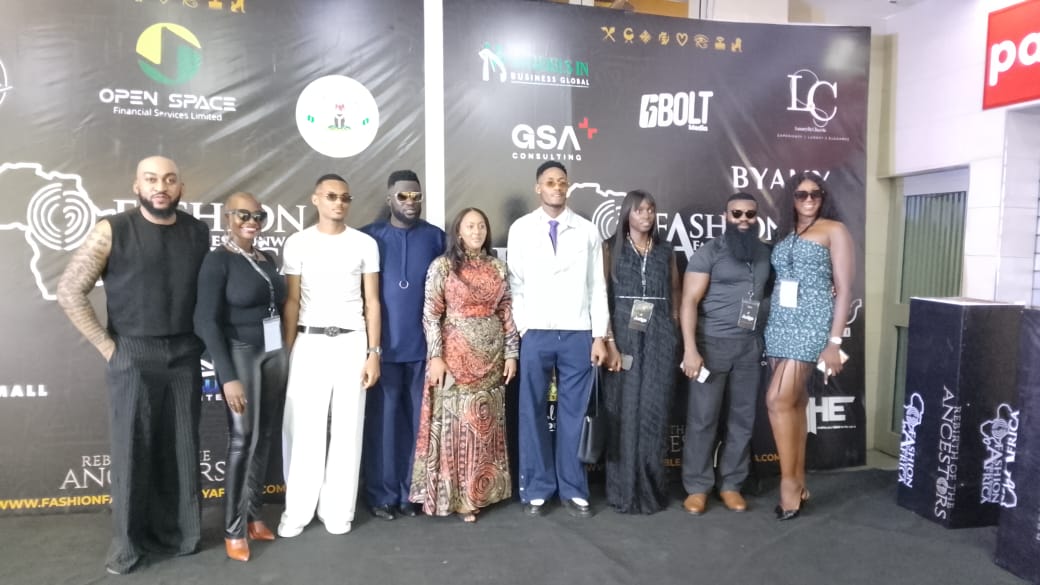
The second edition of Fashion Fables Runway Africa (FFRA) has promoted inclusivity, sustainability and the preservation of African heritage, with organisers advocating greater participation in the fashion industry regardless of age, body type or physical ability.
The youth-focused Pan-African fashion initiative, held on Sunday at Jabi Lake Mall, Abuja, featured an audition and exhibition involving more than 300 models, comprising children, teenagers and adults.
Convener of the event, Obinna Obitaris, said FFRA was established to change the narrative around African fashion by encouraging Africans to tell their own stories through clothing, fabrics and cultural heritage.
Obitaris explained that the initiative, formerly known as Fashion Fusion Africa, was rebranded as Fashion Fables Runway Africa to better reflect its vision and expand its impact.
He said the platform was built around inclusivity, sustainability and green initiatives, particularly by creating opportunities for people who are often overlooked by conventional fashion shows.
“We are here to tell our story around African stories and African ancestors, telling stories around fabrics, telling our own stories by ourselves, not just strangers telling our stories,” he said.
According to him, the 2026 audition brought together male and female models across different age groups and challenged stereotypes about who could participate in the fashion industry.
He said FFRA had previously featured models with albinism, vitiligo and other special needs, stressing that inclusivity remained a major pillar of the initiative.
Obitaris recalled that the 2025 edition featured Toby, an autistic model of African descent who travelled from the United States to participate in the runway.
He disclosed that the 2026 edition would also feature a model undergoing chemotherapy for cancer, describing her participation as another demonstration of the organisers’ commitment to ensuring that everyone has an opportunity to be seen and celebrated.
“Our aim is to create a space where everybody feels accepted and involved — a non-judgmental space,” he said.
He said the fashion industry should not only focus on employment creation but also provide an environment where creativity could thrive and people from diverse backgrounds could showcase their talents.
Obitaris also commended the Minister of Creative Economy, Hanatu Musawa, for supporting the initiative, noting that the ministry provided technical support for the previous edition and endorsed the 2026 event.
He acknowledged the contributions of sponsors and partners, including AIT, Africa News Nation (ANNTV), Auto Space, The Blank Grand, Jabi Lake Mall, DNT Autos and Juma Coffee.
Also speaking, one of the judges, Precious Momoh, said FFRA was designed to challenge conventional standards in the modelling industry by providing opportunities for people who are often underrepresented on fashion runways.
Momoh said the event featured plus-size and petite models as well as people with albinism, among other participants.
“At Fashion Fables, the whole idea is inclusivity. We’re trying to bring people that are not the regular people you would see on the runway,” she said.
She said the initiative was also aimed at building confidence among participants and encouraging people to embrace their bodies and individuality.
“You don’t have to limit yourself to your body size or how you look. You can achieve anything you want,” Momoh said.
She added that FFRA was using fashion to reconnect contemporary creativity with African heritage through colours, fabrics, diverse body types and cultural identities.
FFRA Advances Sustainable African Storytelling
The Brand and Technical Director of FFRA, Genesis Akpoloyowa, said the 2026 exhibition was focused on sustainability and the need for Africans to take ownership of their narratives.
Akpoloyowa said the initiative was created to showcase African stories through fashion while demonstrating that sustainable practices had long existed in African societies.
He challenged the perception that sustainability was exclusively a Western concept, noting that African communities had developed sustainable methods of living long before colonisation and modern global commerce.
According to him, FFRA would continue to use fashion as a vehicle for cultural expression, youth empowerment, creativity and the promotion of African identity.
The organisers said the initiative would continue to create opportunities for young people and others excluded from mainstream fashion to showcase their talents, express themselves and contribute to the growth of Africa’s creative economy.