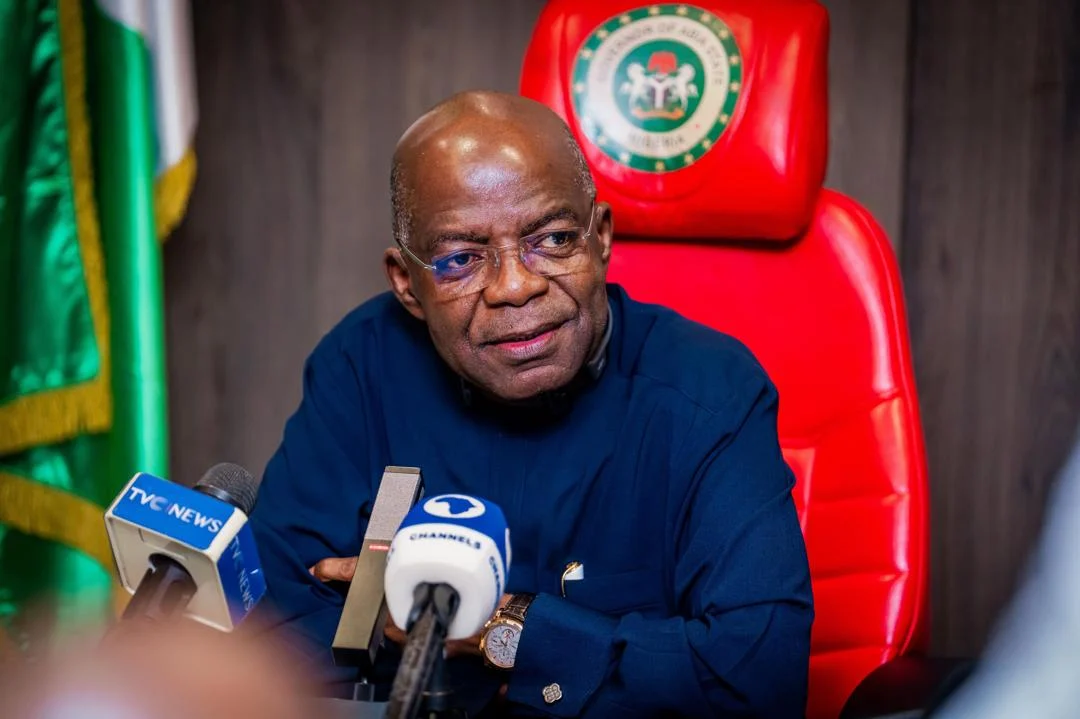
Since assuming office on May 29, 2023, Governor Alex Chioma Otti, OFR, has embarked on an ambitious programme of reforms aimed at repositioning Abia State, rebuilding critical infrastructure, strengthening public institutions and improving residents’ quality of life.
Anchored on accountability, institutional restructuring, infrastructure renewal and economic transformation, the Otti administration has introduced interventions across roads, healthcare, education, transportation, power, digital innovation, youth empowerment and public financial management.
As the state approaches the 2027 general elections, it is important to examine these initiatives, their impact and the need to sustain policies capable of delivering lasting benefits.
One of the most visible achievements of the administration has been its road infrastructure programme. Recognising the importance of good roads to commerce, agriculture, transportation and industrial growth, the government has prioritised road construction and rehabilitation across the state.
At its third anniversary in May 2026, the administration reported completing 414 road projects covering approximately 864 kilometres, while another 82 projects spanning about 212 kilometres were under construction.
Notable projects include Port Harcourt Road and Ohanku Road in Aba, Omenuko Bridge and the Umuahia–Uzuakoli–Abariba–Ohafia corridor.
These interventions are expected to improve connectivity, facilitate the movement of goods and services, reduce transportation difficulties and stimulate commercial activities.
For a state whose economy depends significantly on entrepreneurship, manufacturing and small businesses, functional road infrastructure is indispensable. Sustaining these investments will require quality construction, effective drainage and regular maintenance.
The administration has also prioritised rebuilding the state’s healthcare delivery system through infrastructure rehabilitation, personnel recruitment and improved access to medical services.
A major intervention is Project Ekwueme, designed to rehabilitate and equip 200 primary healthcare facilities across the state’s 184 wards. The government has also reported retrofitting 277 primary healthcare centres, including facilities supported through World Bank-assisted programmes, alongside recruiting healthcare professionals.
Investments in general hospitals, specialist medical facilities and health insurance initiatives further demonstrate the government’s commitment to strengthening healthcare delivery.
The next priority should be ensuring that these facilities have qualified personnel, essential medicines, functional equipment, electricity, potable water and adequate funding.
Education has equally received attention. The introduction of free and compulsory basic education seeks to remove financial barriers and expand access to schooling.
In 2025, the government reported recruiting 5,394 teachers to address manpower shortages in public schools. This investment must be complemented by adequate classrooms, instructional materials, teacher development, sanitation and improved learning environments.
Ultimately, educational success should be measured by the quality of learning and the knowledge and skills acquired by pupils.
The Abia Green Shuttle electric-bus initiative represents an effort to modernise public transportation and provide residents with more organised mobility options.
The introduction of electric buses, shelters and terminals has the potential to improve urban transportation while supporting cleaner mobility.
Environmental sanitation, streetlighting and urban renewal have also featured in the administration’s development agenda.
Similarly, the Aba master plan developed in collaboration with UN-Habitat and the digitisation of millions of land records represent important steps towards modernising land administration, reducing disputes, improving property documentation and strengthening investor confidence.
Reliable electricity remains essential for industrial growth and business development. The administration’s power-sector initiatives therefore seek to improve electricity supply, particularly for commercial establishments, industrial clusters and small businesses.
Equally significant is its investment in technology and youth empowerment through the Abia TechRise Digital Skills Development Programme.
Implemented through a partnership involving the state government, the 17 local government councils and LearnFactory Nigeria, TechRise is designed to equip young Abians with practical digital competencies and prepare them for opportunities in the global technology industry.
Since its commencement in February 2025, the programme has completed three cohorts, training 2,210 participants. The first cohort graduated 510 participants in May 2025, while the second and third cohorts trained 850 participants each, graduating in December 2025 and August 2026 respectively.
Training areas include software development, mobile application development, data engineering, cybersecurity, artificial intelligence, digital arts and animation.
Beyond skills acquisition, the administration has connected the initiative with employment and financial support. Governor Otti approved automatic employment into the Abia State Civil Service for 19 outstanding graduates from the first cohort, 50 from the second and another 19 from the third cohort.
At the third cohort’s graduation in August 2026, he also announced a ₦100,000 support grant for each of the 850 graduates and allowed them to retain their training laptops.
Another notable initiative is the ThriveAbia Digital Capacity Development and Mentorship Programme. Following a pilot training of 100 participants, which recorded an 87 per cent graduation rate, the Governor approved its expansion to accommodate 1,000 young people.
Implemented in partnership with Tech Excentric, the programme focuses on digital skills, entrepreneurship and mentorship.
The administration’s collaboration with the United Nations Development Programme through the UNIPOD initiative also demonstrates its interest in promoting innovation and technology-driven entrepreneurship.
These initiatives deserve sustained investment. Their success should be measured not only by participants trained but also by jobs secured, businesses established, innovations developed and improvements in beneficiaries’ economic circumstances.
Beyond physical infrastructure, the Otti administration has promoted reforms in public financial management, debt administration and budget transparency.
Sustainable development requires prudent resource management, responsible borrowing, transparent procurement and effective monitoring of public expenditure.
Government must therefore continue strengthening institutions, improving revenue generation and ensuring that public resources produce measurable benefits for residents.
As Abia approaches the 2027 general elections, the sustainability of ongoing development initiatives deserves serious public attention.
Roads under construction must be completed and maintained. Rehabilitated hospitals must remain functional, schools adequately equipped, and power and transportation initiatives must deliver tangible benefits. Digital empowerment programmes must also continue creating opportunities for young people.
Development should not be reduced to political competition or abandoned because of changes in government. Projects and policies that serve the public interest deserve to be strengthened and sustained.
Governor Otti’s reform agenda provides an opportunity to consolidate ongoing investments, deepen institutional restructuring and address developmental challenges that have persisted over the years.
Nevertheless, continuity must go hand in hand with accountability. The government should maintain transparency, provide regular project updates, disclose relevant expenditure information and remain responsive to constructive criticism. Citizens, civil society organisations and the media also have responsibilities to monitor projects and demand results.
As voters prepare for 2027, Abians should assess the administration’s record, evaluate its commitments and consider the implications of continuity or change for the state’s future.
Where performance meets public expectations, supporting the continuation of the administration’s development agenda through democratic participation and the ballot box becomes a legitimate consideration.
Governor Alex Chioma Otti’s administration has initiated reforms across several critical sectors. Their long-term impact will depend on effective implementation, institutional stability and sustained commitment.
The ultimate objective should be an Abia where good roads support businesses, hospitals provide dependable healthcare, schools produce competent graduates, electricity powers industries, digital skills create employment and public institutions serve citizens efficiently.
Abia needs development that transcends personalities and electoral cycles. It needs enduring policies, functional institutions and accountable leadership.
As 2027 approaches, residents should remain engaged in the conversation about governance, continuity and development, making informed decisions based on verifiable performance and the collective aspirations of the state.
The progress of Abia must remain everyone’s responsibility. What works should be sustained, what falls short corrected, and every public investment made to serve the people.
The future of Abia must be defined not simply by who occupies the seat of power, but by the quality, consistency and sustainability of governance delivered to its citizens.