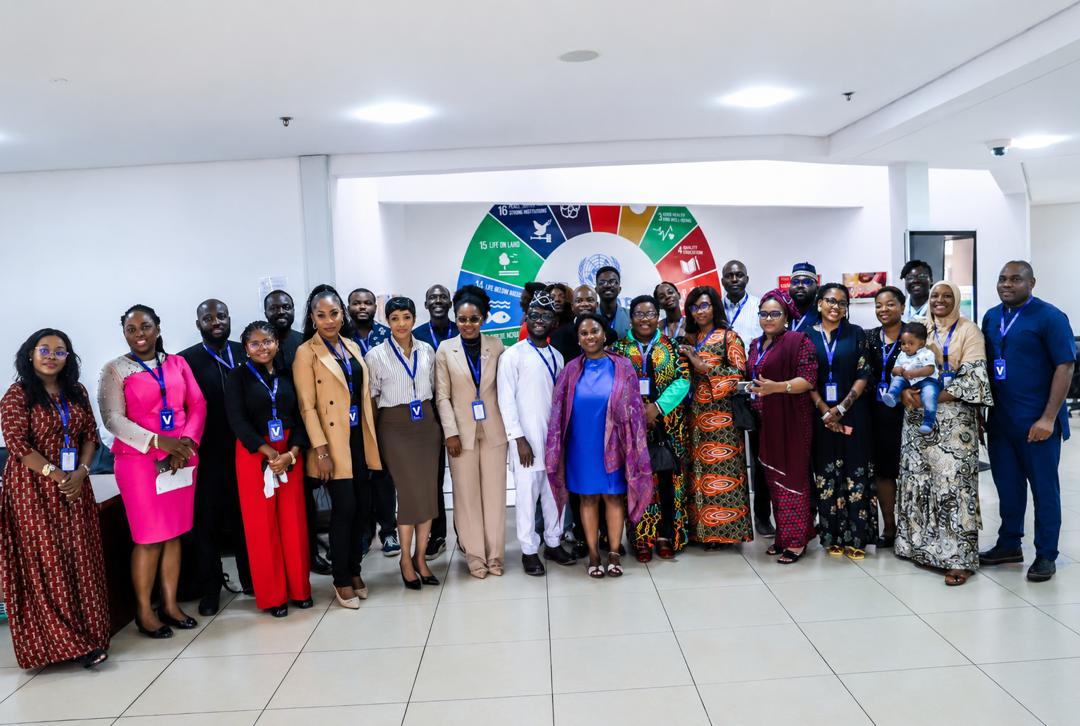
Media professionals, civil society organisations (CSOs), election observers, broadcasters and communication experts have called for stronger partnerships, enhanced protection for journalists and greater transparency in Nigeria’s electoral process to ensure credible, peaceful and inclusive elections.
The call was made during a Media-CSO Roundtable held in Abuja and jointly organised by the Journalists for Human Rights (JHR) and the United Nations Office of the High Commissioner for Human Rights (OHCHR).
The meeting brought together key stakeholders to examine challenges affecting election coverage and identify practical strategies for strengthening cooperation between the media and civil society in promoting electoral integrity.
Deliberations focused on improving access to electoral information, enhancing security for journalists, combating misinformation, strengthening fact-checking mechanisms and fostering a more coordinated approach to election reporting.
At the end of the roundtable, participants adopted a communiqué outlining several recommendations aimed at improving the conduct and coverage of elections in Nigeria.
On transparency and information management, stakeholders advocated the establishment of a centralized and verified platform for the timely dissemination of electoral information to both media organisations and civil society groups.
They also urged the Independent National Electoral Commission (INEC) to conduct mandatory pre-election testing of electoral technologies and formally recognize the media as a critical stakeholder in the electoral process.
Participants further recommended that post-election assessments should comprehensively document incidents of journalist harassment, restrictions on information access and denial of access to polling and collation centres.
To deepen collaboration between the media and CSOs, the communiqué proposed the creation of a joint information-sharing platform where verified data, resources and content can be exchanged efficiently.
Stakeholders also recommended categorizing civil society organisations according to their areas of expertise to assist journalists in sourcing credible information and expert opinions.
In addition, CSOs were encouraged to engage more directly with media organisations and deploy field personnel as information sources in communities where media presence is limited.
Addressing the issue of funding, participants called for structured support mechanisms to strengthen election reporting and improve media capacity.
They also endorsed a proposal by the Broadcasting Organisations of Nigeria (BON) for the establishment of a shared resource pool that would provide participating organisations with access to photographs, video footage, election data and other editorial materials.
The safety of journalists emerged as a major concern during the discussions.
Participants recommended the development of a Security Accord involving the media, CSOs, security agencies and relevant stakeholders to provide a coordinated framework for protecting journalists during election coverage.
They also proposed the establishment of an Inter-Agency Consultative Security Committee with representation from both media and civil society groups, while encouraging regular consultations among INEC, security agencies, journalists and CSOs before elections.
The communiqué further emphasized the need for continuous capacity building in election reporting, with training programmes to be conducted before, during and after election cycles.
Participants stressed that such training should extend beyond practicing journalists to include journalism students, young media professionals and digital content creators.
They also highlighted the importance of building competencies in artificial intelligence, fact-checking, data verification and strategies for tackling misinformation and disinformation.
To strengthen editorial independence and expand information access, the stakeholders proposed the creation of independent channels through which journalists can share important election-related information that may not be published by their primary media outlets.
They also recommended the development of a digital reporting portal that would enable journalists, bloggers and citizen reporters in underserved communities to submit verified reports for wider dissemination.
On combating fake news, participants underscored the need for every media organisation to establish dedicated fact-checking units and strengthen verification processes to ensure accuracy, professionalism and public trust in election reporting.
The stakeholders expressed optimism that stronger collaboration between the media and civil society would contribute significantly to credible elections, increased public confidence in democratic institutions and a more peaceful electoral environment in Nigeria.