The Federal Government has called for urgent and decisive action to curb xenophobic and Afrophobic attacks against African nationals in South Africa, warning that continued violence could undermine continental integration and peaceful coexistence.
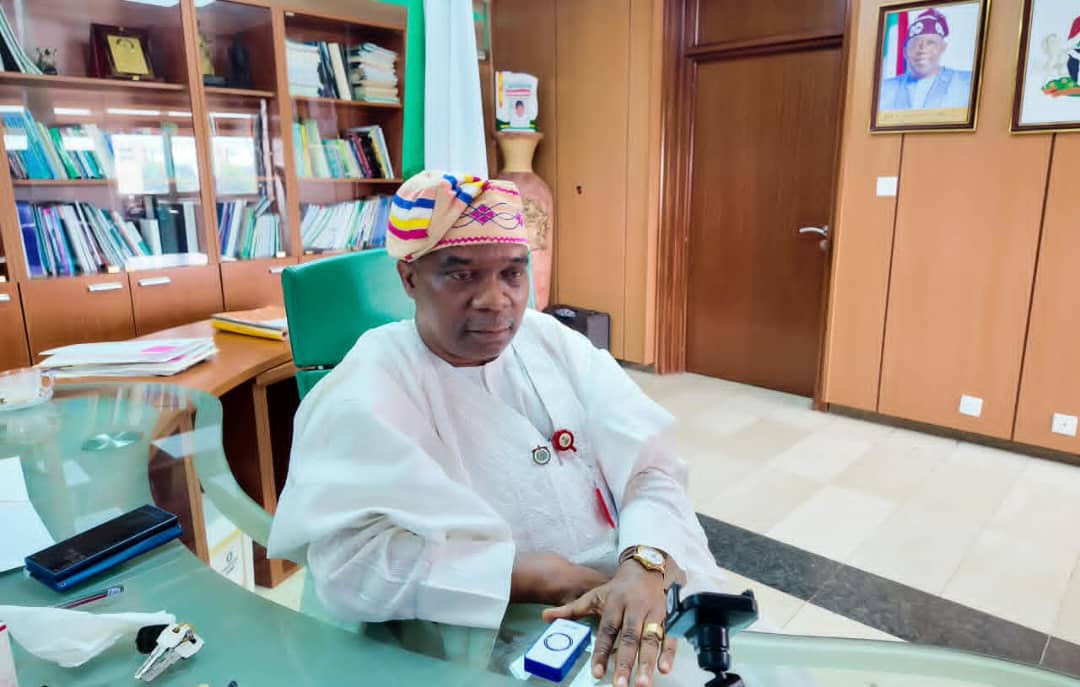
The Minister of State for Foreign Affairs, Ambassador Sola Enikanolaiye, made the call on Tuesday during a virtual roundtable on “South Africa’s Xenophobia in Comparative Perspective,” organised by the Nigerian Institute of International Affairs (NIIA).
Enikanolaiye said Nigeria would continue to address the issue objectively, without either denying or exaggerating the reality of the attacks, which he said had taken on a distinctly African character in the post-colonial and post-apartheid era.
He argued that “Afrophobia” more accurately captures the hostility and violence directed at fellow African nationals living in South Africa.
The minister expressed concern that citizens of African countries which stood firmly with South Africa during its liberation struggle were now, in some instances, being treated as unwanted foreigners.
He said Nigeria’s contributions to the anti-apartheid struggle remained significant and should not be forgotten.
According to him, the Ministry of Foreign Affairs has directed the NIIA to conduct a comprehensive study documenting Nigeria’s role in supporting South Africa’s liberation.
Enikanolaiye said Nigeria’s financial commitment to the struggle was estimated at more than $60 billion, in addition to the nationalisation of British Petroleum, scholarships offered to South Africans and the refuge provided to South African leaders during the apartheid era.
“The relationship between Nigeria and South Africa is not reducible to trade statistics or diplomatic communiqués. There is history in that relationship. There is blood, sacrifice and solidarity in that history,” he said.
The minister also expressed concern over reported deaths and displacement arising from the attacks, disclosing that about 90 Nigerians had reportedly been killed in Afrophobic violence since June 2022, with fresh incidents recorded in 2026.
He warned that persistent attacks on African migrants could damage South Africa’s international standing, discourage investment, weaken regional cooperation and erode the moral authority the country earned through its liberation struggle.
Call for Stronger Migration Management
Enikanolaiye urged the South African authorities to strengthen migration governance by making immigration systems transparent, humane and effective.
He stressed that the enforcement of immigration laws should remain the responsibility of legitimate government institutions and cautioned against allowing vigilante groups to assume such roles.
The minister also urged political leaders to exercise restraint and responsibility in their public comments on migration, warning that language portraying migrants as criminals or threats to employment could fuel hostility and violence.
He further called for public discussions on migration to be guided by facts and credible data rather than misinformation, rumours and unverified claims.
Nigeria, he said, also wants the existing early-warning and rapid-response mechanisms between Nigeria and South Africa to be fully activated to identify tensions and prevent them from escalating into violence.
Push for African Solidarity
Beyond diplomatic engagement between governments, the minister called for stronger people-to-people relations involving businesses, academic institutions, religious and traditional leaders, youth groups, civil society organisations and the media.
Such engagements, he said, would help rebuild trust and reinforce the shared identity of Africans.
Enikanolaiye disclosed that Nigeria, in collaboration with Ghana, would raise the matter at the next Session of the African Union Assembly of Heads of State and Government.
While acknowledging South Africa’s readiness to discuss the factors driving migration, he maintained that urgent attention must be given to hate-driven violence and attacks that continue to create fear and hardship among African nationals.
He said Africa must move beyond mere tolerance and build a continent where citizens can live and work with equal dignity.
According to him, a Nigerian in Johannesburg and a South African in Lagos should, above all, be recognised as Africans and treated with respect.
Tinubu Reaffirms Protection of Nigerians Abroad
The minister reaffirmed President Bola Ahmed Tinubu’s commitment to protecting the welfare and interests of Nigerians living outside the country.
He cited the President’s intervention in the recent repatriation of Nigerians from South Africa and commended Nigeria’s diplomatic missions in Pretoria and Johannesburg, alongside other stakeholders, for ensuring the prompt completion of the exercise.
Enikanolaiye said the Federal Government would continue to work with South Africa, the African Union, ECOWAS and other partners to translate the vision of African integration into practical unity, mutual respect and peaceful coexistence.