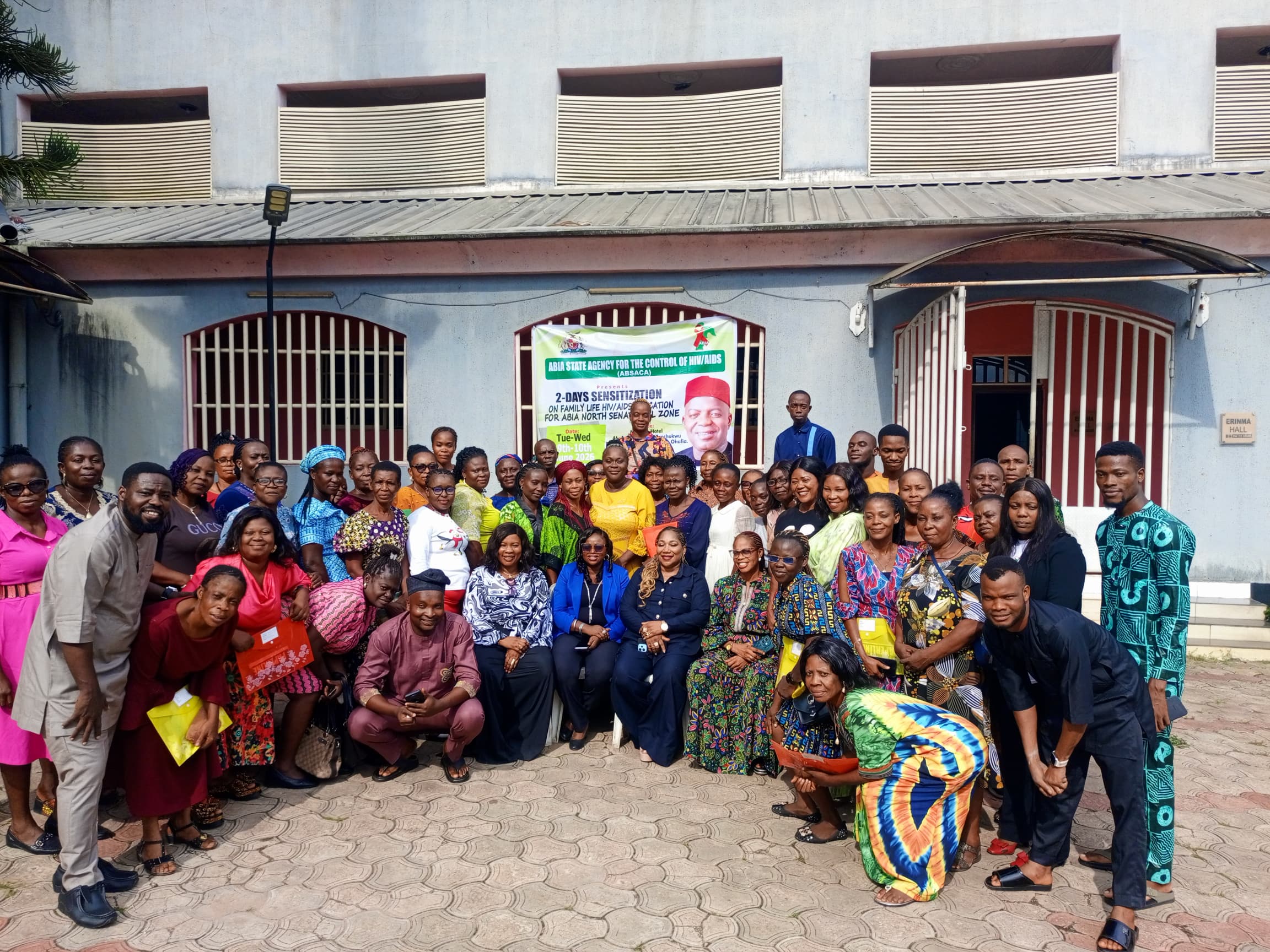
The Abia State Agency for the Control of HIV/AIDS (ABSACA) in collaboration with the Abia State Government, has successfully concluded a two-day training programme for secondary school teachers in the Abia North Senatorial Zone, aimed at equipping participants with the knowledge and skills required to deliver comprehensive HIV prevention education, promote healthy lifestyles, and support adolescent health and well-being in schools.
The training, themed “Family Life and HIV Education (FLHE)”, was held at Mayten Hotel, Ohafia Local Government Area of Abia State. It brought together officials of the State AIDS Control Agency (SACA) and HIV/AIDS focal teachers from secondary schools across the Abia North Senatorial Zone.
In her opening remarks, the Director-General of ABSACA, Dr. Uloaku Emma Ukaegbu, commended the Governor of Abia State, Dr. Alex Chioma Otti, OFR, for his commitment to improving healthcare delivery and supporting initiatives aimed at safeguarding the future of young people in the state.
Dr. Ukaegbu stated that the objective of the training was to strengthen the capacity of teachers to effectively implement the Family Life and HIV Education curriculum in schools, provide accurate information on HIV prevention and reproductive health, and guide adolescents towards making informed and responsible life choices.
She noted that teachers play a critical role in shaping the attitudes and behaviours of young people and emphasized the need for participants to apply the knowledge gained during the training in their respective schools.
The training featured intensive sessions on the Family Life and HIV Education concept, basic facts about HIV and AIDS, the overview of adolescent reproductive health in Nigeria, adolescent lifestyle and sexual behaviour, personal health and healthy living, the reproductive system and puberty, as well as sexually transmitted infections (STIs).
Other topics covered included condom use and prevention strategies, relationships and friendship, child abuse and child protection mechanisms, the influence of religion, culture and the media on adolescent reproductive health, contemporary social problems affecting young people in Nigeria, drug abuse, drug use and trafficking, harmful traditional practices, gender issues in HIV prevention, and communication skills for effective FLHE teaching.
Participants were also trained on essential life skills such as decision-making, assertiveness, negotiation and refusal skills, values clarification, self-esteem and body image, family resources, record keeping, and reporting tools.
The facilitators, Mr. Chinedu Iro, Mrs. Joy Ihunweze Ugonma, Mrs. Uche Mary, and Mr. Ndubuisi Kanu, delivered detailed presentations on various aspects of Family Life and HIV Education, emphasizing the need for teachers to serve as role models and reliable sources of information for adolescents.
They educated participants on communication skills for effective FLHE teaching, stressing the importance of creating a safe and supportive classroom environment where students can freely discuss issues relating to health, relationships and personal development. The facilitators also highlighted the significance of life skills such as decision making, assertiveness, negotiation, and refusal skills in helping young people resist peer pressure and make informed choices.
Sessions on values clarification, self-esteem and body image focused on helping adolescents develop confidence, recognize their self-worth and avoid behaviours that may expose them to health and social risks. Participants were further trained on family resources and support systems available to young people, as well as proper record keeping and reporting procedures for FLHE activities in schools.
The facilitators also discussed child abuse and child protection mechanisms, urging teachers to remain vigilant, identify signs of abuse early and report cases through appropriate channels. They examined the influence of religion, culture and the media on adolescent reproductive health, encouraging teachers to provide accurate information that would help students navigate societal pressures and misconceptions.
In addition, participants received training on contemporary social issues affecting young people in Nigeria, including drug abuse, drug trafficking, cultism, sexual exploitation, and other risky behaviours. The facilitators emphasized the need for early intervention, guidance, and counselling to help students make positive life choices.
They further underscored the importance of the ABC approach to HIV prevention: Abstinence, Being Faithful, and Correct and Consistent Condom Use, while encouraging participants to continuously educate students on HIV prevention, sexual and reproductive health and responsible behaviour.
The facilitators urged teachers to closely monitor activities in their schools and ensure that the knowledge acquired during the training is effectively transmitted to students, thereby contributing to the reduction of HIV infections and other reproductive health challenges among adolescents in Abia State.
The programme included practical sessions during which participants completed FLHE reporting forms, undertook post-training assessments, and participated in workshop evaluation exercises designed to measure knowledge gained and enhance future programme implementation.
Participants expressed appreciation to ABSACA and the State Government for the opportunity, describing the training as timely and impactful. They pledged to utilize the knowledge acquired to educate students, promote healthy behaviours and contribute to the prevention of HIV and other reproductive health challenges among adolescents in Abia State.