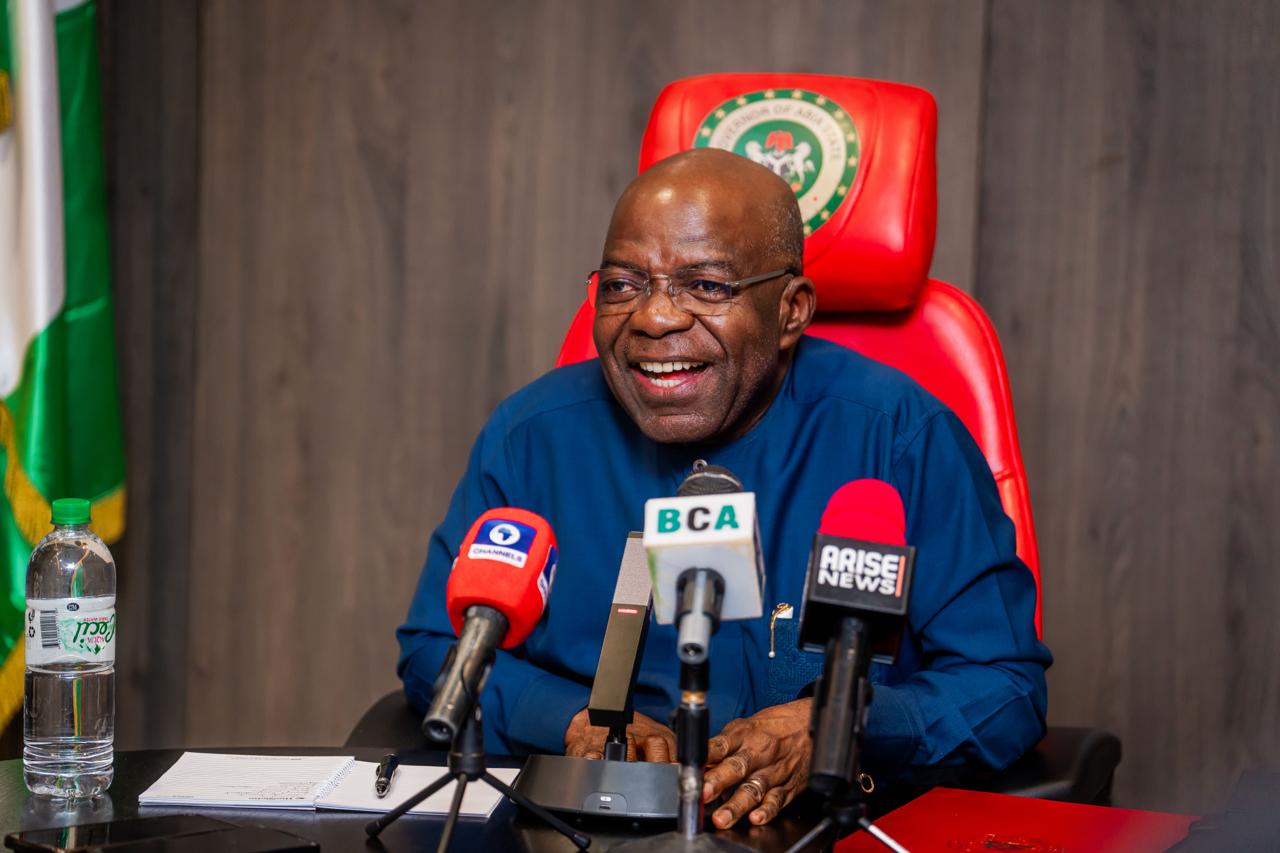
Abia State Governor, Dr Alex Otti, has explained the circumstances surrounding the state government’s decision to revoke the Certificate of Occupancy (CofO) covering land originally earmarked for the Enyimba Economic City project.
Governor Otti said his administration was not opposed to the Enyimba Economic City project but insisted that all processes concerning the development must be transparent and properly executed.
The Governor disclosed this on Friday when members of the reconstituted Board of the Enyimba Economic City Development Company paid him a courtesy visit in Nvosi, Isiala Ngwa South Local Government Area of the state.
He said his administration remains pro-business and would continue to support genuine investments, provided they complied with due process and protected the interests of the state, communities and other stakeholders.
“I’m not against any Enyimba Economic City, but I believe that there are things that were not properly done and they should be done properly.
“But having said that, since the matter is subjudice, I’ll leave it at that”, Governor Otti said.
The Governor explained that the land originally associated with the project covered about 9,803 hectares across parts of Ugwunagbo, Ukwa East and Ukwa West Local Government Areas.
According to him, the state government had initially sought to retain about 1,000 hectares of the land for the development of the Abia Industrial and Innovation Park.
“About how we got here, when we had our meeting, it was about the company ceding just about a thousand hectares out of the close to ten thousand hectares.
“I think it’s about nine thousand eight hundred and three hectares of land spanning through Ugwunagbo, Ukwa East and Ukwa West and we were setting up the Abia Industrial and Innovation Park.
“So after the meeting, the company agreed only to renege later and asked us to go to the Federal Government.
“So, what we did was to; since the land belongs to us as a government, and since we couldn’t take only one thousand, we revoked the entire CofO and took the one thousand that we required,” he said.
Governor Otti said the state government’s action was also informed by concerns over the processes through which the land had been acquired and the absence of relevant documentation.
He noted that the dispute subsequently went to arbitration, where, according to him, some monetary awards were made in favour of the state government.
The governor, however, cautioned that the matter was now before the courts and said he would not make extensive comments that could prejudice the judicial process.
“I’m just going into this out of respect and this matter is now before the court, so ordinarily I would say it’s sub-judice until the court finishes with this matter.
“But because of the caliber of people who have joined the board, that’s why I’m discussing it” .
Governor Otti also questioned the equity arrangement reflected in documents available to his administration, saying the state was entitled to only six per cent equity in the company despite the substantial size of the land associated with the project.
“Even the documents I have shown you say that the government has six per cent of the equity.
“I was just asking myself, so you give 10,000 hectares of land in Abia and you have six per cent equity? I would not do that kind of deal”, he said.
The governor further expressed concern over claims that some original landowners had not received compensation, noting that the issue had contributed to multiple legal disputes.
He said the state government had no objection to investors acquiring land for the economic city if the affected communities were properly compensated and appropriate agreements reached.
“If Enyimba Economic City goes and acquires those lands, pays the people, and they have an agreement, you should come and I will give them Certificate of Occupancy or title documents. I don’t have a problem.
“I support businesses. People are acquiring land, once you do the right thing, I have no problem”, Governor Otti added.
He said his administration would continue to encourage genuine investment, insisting on transparency, fairness and accountability in transactions involving public assets.
Governor Otti also congratulated members of the reconstituted board and expressed confidence that their experience would help address outstanding issues surrounding the project.
He said leadership must prioritise the welfare and security of the people, adding that any departure from those responsibilities amounted to selfish leadership.
The governor thanked the board members for the visit and expressed confidence that their intervention would contribute to resolving the issues surrounding the project within the ambit of the law.
Earlier, Chairman of the Board of the Enyimba Economic City Development Company, Mazi Sam Ohuabunwa, said the visit was primarily to introduce the newly constituted board to the governor.
Mazi Ohuabunwa described the Governor Otti administration as a demonstration of the dividends of democracy, saying residents could now see tangible improvements in infrastructure and other sectors of the state.
He said the board had examined the disagreement between the company and the Abia Government and described the dispute as puzzling, given the state government’s position as a partner in the Enyimba Economic City project.
According to him, the board was not interested in reopening old wounds but was seeking forgiveness and an opportunity to rebuild its relationship with the state government.
“Our critical request is to ask for your forgiveness and forbearance in all the ways that things did not happen the way they ought to have happened.
“We should begin to see how we can walk back, repair the relationship, rebuild it and move forward together”, Mazi Ohuabunwa said.
Mazi Ohuabunwa described the Enyimba Economic City as a project of strategic importance to Abia, the South-East geopolitical zone and Nigeria, and expressed the board’s readiness to work with the governor to achieve its objectives.
He urged that nothing should be allowed to interrupt the development process already initiated, saying the board was committed to finding a way forward in the interest of the project and the region.