The Abia State Government has approved the establishment of a committee to drive innovation commercialisation and strengthen research-based development.
This is part of efforts by the State government to transform promising ideas into market-ready solutions capable of stimulating economic growth and technological advancement.
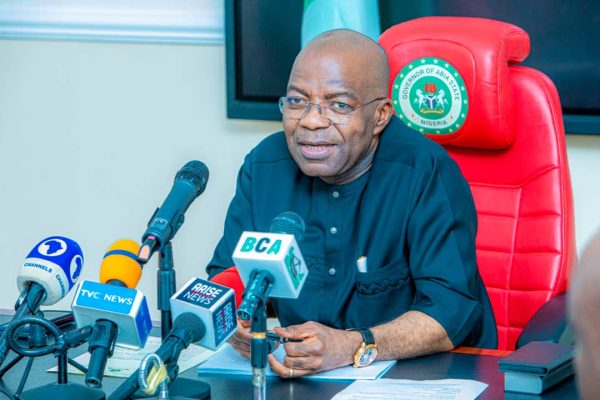
The Commissioner for Information, Prince Okey Kanu, disclosed this while briefing journalists on the outcome of this week’s State Executive Council meeting presided over by Governor Alex Otti.
Prince Kanu said the initiative, which aligns with the Federal Government’s innovation and science framework under the “Energised Commercialisation Now” programme, would bring together stakeholders from government, academia and industry to identify and promote commercially viable research projects.
According to him, the committee is expected to identify credible innovators, start-ups and researchers within the state and create pathways for turning research outputs into practical and economically beneficial products.
He said the committee would also prepare and present market-ready innovation outcomes, strengthen collaboration among academic institutions, industries and government agencies, promote youth and women participation and develop a state research and innovation policy.
Prince Kanu further disclosed that the Ministry of Science, Technology and Innovation would organise a five-day Science, Technology, Engineering and Mathematics (STEM) Week for secondary school students across the state.
He said the programme would showcase educational technology solutions, launch a STEM platform and establish Girls in ICT Clubs in 30 secondary schools.
Prince Kanu also announced that the State government has deployed a pilot biogas digester project at a secondary school in Owerinta as part of efforts to explore renewable energy alternatives.
“The project, when fully on screen, will demonstrate the viability of biogas as a renewable energy source from organic waste within schools or institutions. The project will also seek to generate available research data for potential large-scale implementations”, he said.
Contributing, the Commissioner for Science and Technology, Mr David Kalu, explained that the pilot biogas initiative is aimed at assessing the feasibility, cost-effectiveness and scalability of producing biogas from organic waste for possible use in schools and other public institutions across the state.
He noted that the project is still in its early stage and has not yet begun gas production, adding that results and feedback from the pilot would determine whether it would be expanded to other schools if successful.
The commissioner who also spoke on the Federal Government’s “Energised Commercialisation Now” initiative, stated that Abia State has been directed to set up a committee comprising stakeholders from government, academia and industry to identify viable research projects for commercialisation at the national level.
He further explained that the committee would also be tasked with developing a long-term research and innovation policy for the state, aimed at promoting useful, resource-driven research and encouraging projects with commercial potential.