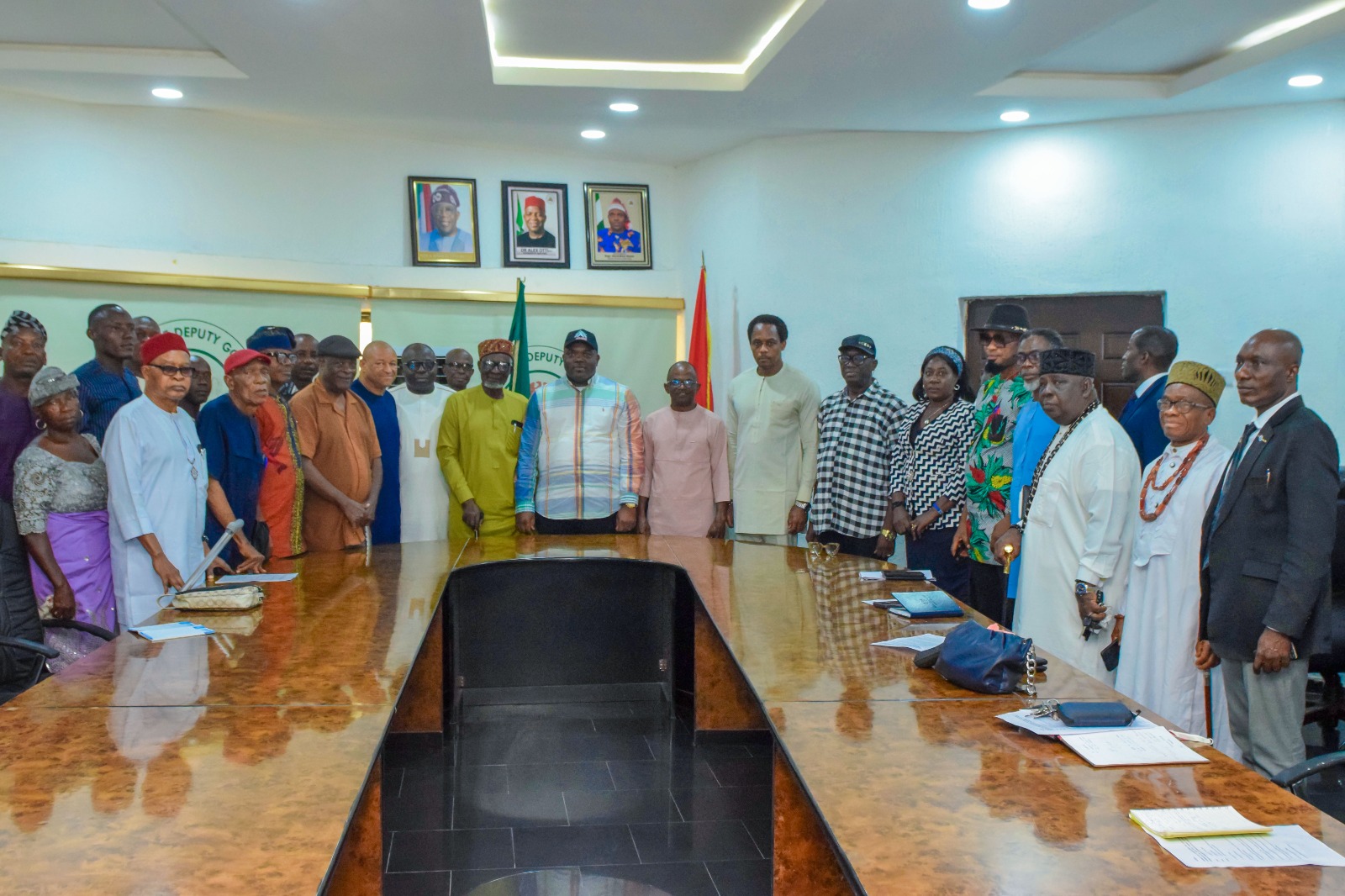
ABIA MOVES TO END DECADES-OLD BOUNDARY DISPUTE WITH ANAMBRA, VOWS TO PROTECT STATE TERRITORY.
The Abia State Government has reaffirmed its commitment to the peaceful resolution of the lingering boundary dispute between communities in Umunneochi Local Government Area and the neighbouring Owerre-Ezukala Community in Orumba South Local Government Area of Anambra State, declaring that no part of Abia territory will be ceded to any state.
Speaking during a stakeholders’ meeting with traditional rulers, community leaders, youths and representatives of border communities, including Umuaku and Ezioba in Umunneochi, the Deputy Governor of Abia State and Chairman of the State Boundary Committee, Engr. Ikechukwu Emetu, said the administration of Governor Alex Otti remains committed to ensuring the completion of the interstate boundary demarcation exercise in line with existing Supreme Court judgments and the directives of the National Boundary Commission.
Emetu noted that the Abia-Anambra interstate boundary stretches approximately 23 kilometres, of which 15 kilometres have already been delineated, leaving about eight kilometres yet to be demarcated.
According to him, the National Boundary Commission has scheduled a joint interstate meeting for July 1 and 2, 2026, in Awka, Anambra State, to conclude the exercise and bring lasting peace to the affected communities.
The Deputy Governor stressed that Supreme Court judgments must be respected by all parties, maintaining that Abia State would continue to pursue lawful means in resolving the dispute.
He explained that boundary demarcation is primarily for administrative purposes and should not be misconstrued as an attempt to dispossess anyone of property or ancestral homes.
“Boundaries are for administration and not for division. We are all Nigerians. The demarcation exercise will not take away anybody’s house or means of livelihood. What is important is that the rule of law must prevail and the Supreme Court judgment must be respected,” he said.
Emetu further disclosed that the state government is considering infrastructure development along the disputed corridor, including the rehabilitation of access roads leading to the boundary areas, as part of efforts to reinforce government presence and stimulate development.
He commended residents of the affected communities for maintaining peace despite years of disagreements and urged them to continue cooperating with government and security agencies.
Quoting biblical injunctions on peaceful coexistence, the Deputy Governor emphasized that peace remains the foundation for development, investment and economic growth.
“Security is everybody’s business. No parcel of land is worth the blood of any citizen. We must continue to pursue peace and dialogue while protecting the legitimate interests of our people,” he stated.
Also speaking, the Deputy Chief of Staff, Office of the Deputy Governor, Barr. Chijioke Nwankwo, urged stakeholders to focus on facts that would assist the government in achieving a permanent solution to the dispute.
He reiterated the determination of the state government to resolve inherited boundary challenges through dialogue and collaboration.
Earlier, the Lead Consultant to the Abia State Boundary Committee, Sir Chris Nwanevo, traced the history of the dispute to the colonial era, noting that the matter had passed through various judicial processes before the Supreme Court delivered a landmark judgment in 1972 defining the disputed land according to historical provincial boundaries.
Nwanevo explained that repeated efforts by the National Boundary Commission to complete the demarcation had been hampered by resistance from some stakeholders, resulting in recurring tensions and clashes over land ownership and agricultural activities.
He expressed optimism that the forthcoming interstate meeting would provide an opportunity to finally resolve the remaining eight-kilometre stretch and conclude the entire Abia-Anambra boundary delineation process.
The Mayor of Umunneochi Local Government Area, Chief Sunday Afurobi,, commended the state government for its commitment to addressing boundary issues affecting the council area and pledged the support of the local government towards achieving a peaceful resolution.
Community leaders from Umuaku, Ezioba and Amaogbu communities, including Barr. Emmanuel Pius, Barr. Hilary Chukwugozirim and Hon. Ekpere Achara, also expressed support for the completion of the demarcation exercise while raising concerns over alleged encroachment, illegal land sales, destruction of boundary markers and attempts to frustrate the work of survey teams.
The stakeholders unanimously called for enhanced security during the exercise and urged the National Boundary Commission to complete the installation of boundary beacons to prevent future disputes.