Nigeria has called for stronger economic partnerships with African countries and international investors, stressing the need for strategic autonomy, domestic capital mobilisation and investment in infrastructure to accelerate the continent’s development.
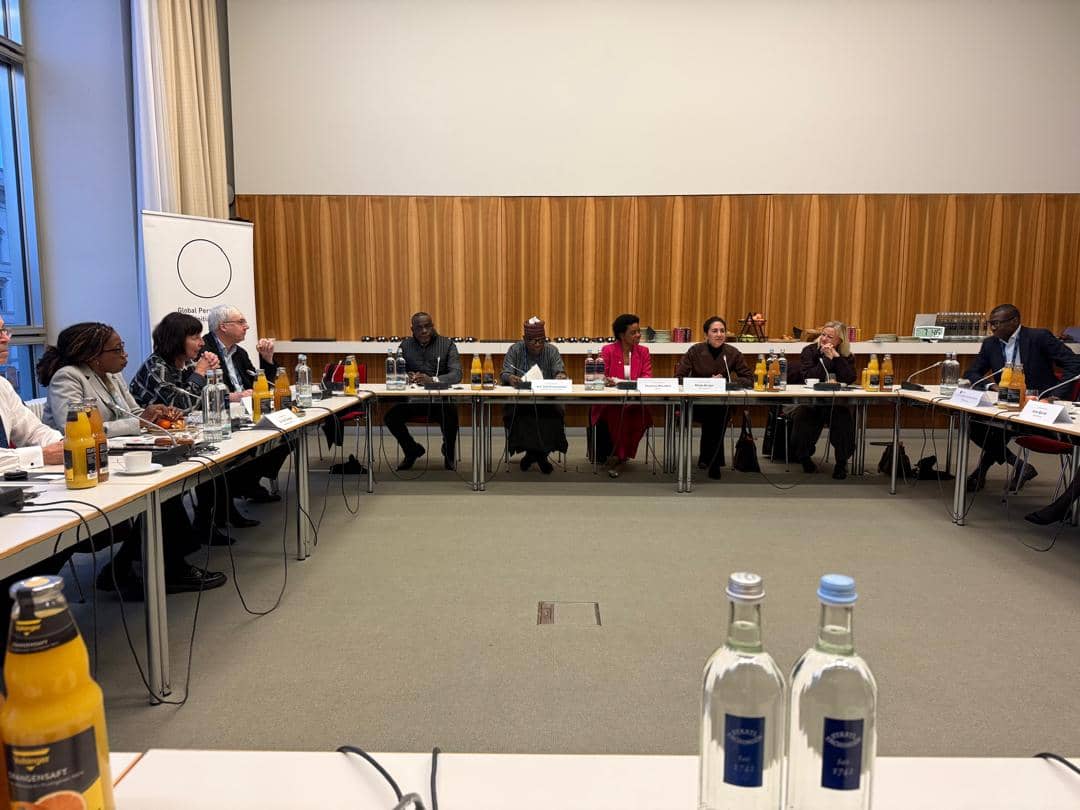
The Minister of State for Foreign Affairs, Ambassador Sola Enikanolaiye, made the call at the Berlin Global Dialogue 2026 in Germany, where he participated in a high-level panel on trade, technology and geopolitical power, as well as a policy session on infrastructure financing.
Enikanolaiye said Africa must take greater control of its development priorities through partnerships founded on mutual respect, shared prosperity and the protection of its national interests.
He noted that global relations were increasingly being shaped by trade, technology and economic considerations rather than rigid political and ideological alliances.
According to him, African countries must strengthen domestic resource mobilisation and ensure that foreign investments complement locally generated capital instead of becoming their primary source of development financing.
Citing the public offer associated with Nigerian industrialist Aliko Dangote, which he said attracted subscriptions from more than 52 countries, the minister highlighted the potential of domestic investment to attract international capital.
He also emphasised the importance of creating a favourable business environment, noting that regional stability and security had helped Nigerian businesses and financial institutions expand across West Africa.
FG Pushes Local Mineral Processing
The minister called for a shift away from exporting unprocessed mineral resources, urging African countries to prioritise local processing and value addition to create jobs, strengthen industries and retain more wealth within their economies.
He said Federal Government policy required investors in relevant sectors to establish local processing facilities, while stronger regulatory oversight would help safeguard the environment and protect host communities.
Drawing lessons from the Niger Delta, Enikanolaiye said resource development must take greater account of the rights and welfare of communities where minerals are extracted.
Enikanolaiye identified reliable electricity, efficient transport networks and expanded digital connectivity as essential foundations for industrial development, investment attraction and employment generation.
He also highlighted electricity metering as an opportunity to improve revenue collection and strengthen the financial viability of Nigeria’s power sector.
While acknowledging reforms undertaken by African governments to improve their investment climates, the minister said attracting long-term capital required bankable projects, predictable regulations, transparent procurement and credible mechanisms for sharing investment risks.
He identified the African Export-Import Bank, African Development Bank, ECOWAS Bank for Investment and Development, and the African Credit Rating Agency in Mauritius as institutions that could help mobilise infrastructure financing through guarantees and blended-finance arrangements.
He further advocated reforms to international credit-rating systems, arguing that more balanced assessments of African economies would improve their access to affordable financing.
Nigeria Highlights AfCFTA, Regional Trade
On regional integration, the minister cited Africa’s reported average economic growth rate of 4.3 per cent and its ambition to raise growth to seven per cent.
He highlighted initiatives such as the proposed ECO regional currency, Nigeria’s National Single Window and the Pan-African Payment and Settlement System as mechanisms for facilitating cross-border trade and improving economic cooperation.
Enikanolaiye, however, noted that intra-African trade remained relatively low at about 16 per cent, urging governments to expand commerce among themselves and build competitive industries under the African Continental Free Trade Area (AfCFTA).
“We need to trade more among ourselves to develop competitive advantages,” he said.
He also stressed that Africa’s ambitions in artificial intelligence and other emerging technologies depended on reliable electricity, stronger digital infrastructure and sustained investment.
Minister Urges Skills Development, Diaspora Investment
The minister called for greater investment in technical education, vocational training and curriculum reform to equip African workers with the skills needed to support industrialisation and infrastructure development.
He also urged governments to explore diaspora remittances as an additional source of development financing, particularly amid declining official development assistance.
Other priorities he outlined included improving Nigeria’s business environment, strengthening domestic revenue generation and attracting long-term investment for strategic infrastructure projects.
Enikanolaiye further cited China’s approach to infrastructure cooperation as an example of alternative partnership models available to African countries.
He reaffirmed Nigeria’s commitment to fiscal discipline, transparency, democracy and the rule of law, describing these principles as critical to investor confidence and sustainable economic growth.
Nigeria, Lesotho Discuss Stronger Ties
Separately, Nigeria’s delegation held bilateral discussions with Lesotho on the sidelines of the Berlin Global Dialogue as part of efforts to deepen diplomatic and economic cooperation.
The Nigerian delegation, representing President Bola Ahmed Tinubu, was led by Enikanolaiye and the Minister of Budget and Economic Planning, Senator Abubakar Atiku Bagudu.
During a meeting at Nigeria House in Berlin, Enikanolaiye and Nigeria’s Ambassador to Germany, Senator Ita Enang, met Lesotho’s Foreign Minister, Limpho Justice Tau, to discuss closer bilateral relations, including the possibility of establishing a physical diplomatic presence for Lesotho in Abuja.
Tau commended Nigeria’s historical role in Africa’s liberation struggles and invited Nigerian industrialists, including the Dangote Group, to explore investment opportunities in Lesotho.
The meeting also identified the African Union Development Agency–New Partnership for Africa’s Development (AUDA-NEPAD) as a potential platform for advancing cooperation between the two countries.
The engagements highlighted Nigeria’s drive to strengthen economic diplomacy, attract foreign investment and build mutually beneficial partnerships across Africa and the wider international community.