The Abia State Government has reaffirmed its commitment to strengthening climate governance and aligning its development agenda with environmental sustainability, as stakeholders from across the Niger Delta called for greater community participation in environmental protection.
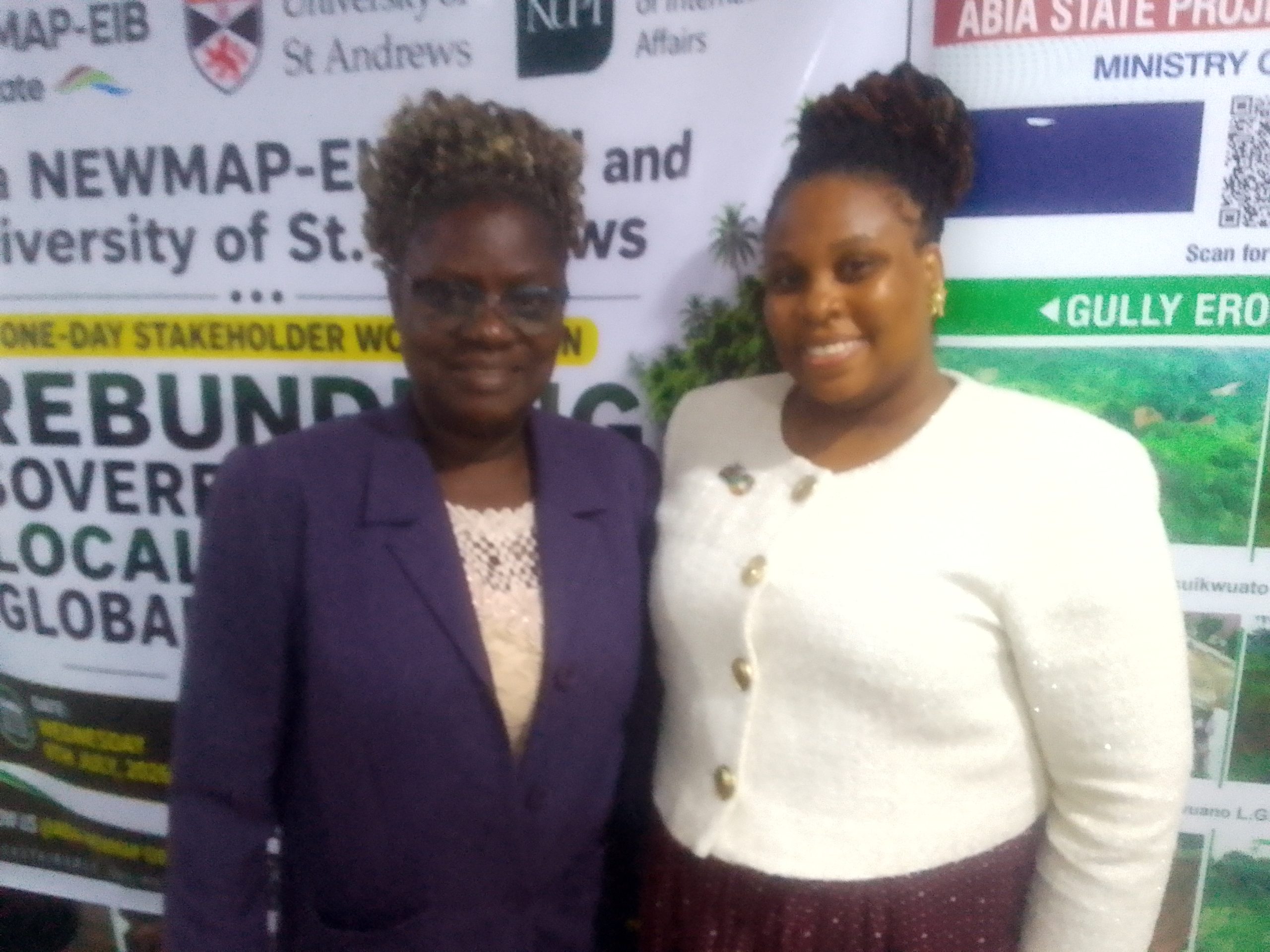
The commitment was made at a one-day stakeholders’ workshop on “Rebundling Sovereignty Over Local Nature in Global Governance,” organised by the Abia State Nigeria Erosion and Watershed Management Project–European Investment Bank (NEWMAP-EIB) in collaboration with the University of St Andrews, United Kingdom. The event was held in Umuahia and attracted participants from the nine Niger Delta states.
Declaring the workshop open, the Commissioner for Environment, Mr. Philemon Ogbonna, said the administration of Governor Alex Otti has placed environmental sustainability, climate resilience and responsible natural resource management at the heart of the state’s development agenda.
Represented by the Permanent Secretary of the Ministry of Environment, Mr. Ikechukwu Oriuwa, the commissioner described the partnership between Abia NEWMAP-EIB and the University of St Andrews as a reflection of the global collaboration required to address environmental challenges with both local and international implications.
He noted that the workshop came at a critical period when communities across the Niger Delta and Nigeria are grappling with increasing environmental threats, including gully erosion, flooding, land degradation, deforestation and pollution.
According to him, these challenges extend beyond environmental concerns, affecting livelihoods, infrastructure, food security, public health and economic development.
Ogbonna said the state had taken deliberate steps to institutionalise sustainable development through its 2024–2050 State Development Plan, which has been enacted into law.
He explained that the framework provides a long-term roadmap for inclusive growth while ensuring environmental sustainability remains central to economic and social development.
He also disclosed that the Ministry of Environment has established a dedicated Climate Change Department to strengthen institutional capacity and provide a structured, accountable approach to climate action.
Earlier in her welcome address, the Abia State Project Coordinator of NEWMAP-EIB, Dr. Nkeiruka Chidia-Maduekwe, said the workshop reflected a shared commitment to responsible governance, environmental protection and community development.
She commended Governor Alex Otti for providing the political support and institutional confidence that have enabled the project to advance environmental sustainability, climate resilience and community well-being across the state.
Dr. Chidia-Maduekwe noted that while NEWMAP is widely recognised for its interventions in erosion control and watershed management, its broader impact lies in fostering collaboration among communities, government institutions and development partners.
She described the workshop as an opportunity to translate research findings into practical solutions and ensure that environmental interventions remain evidence-based, responsible and aligned with global best practices.
Speaking at the event, Dr. Cyril Efiong of the University of St Andrews said the workshop would help generate practical solutions to climate change, erosion, land degradation and community participation through collaborative research and stakeholder engagement.
Participants from the nine Niger Delta states identified deforestation, coastal erosion, land pollution, unregulated fishing, illegal mining and gas flaring as major drivers of environmental degradation in the region.
They stressed the need for stronger community involvement and sustained collaboration among governments, development partners and local stakeholders to tackle the challenges.
The workshop was attended by the Director of the Centre for Sustainable Development Goals, University of Benin, Prof. Francisca Okungbowa, as well as participants from Cross River, Ondo, Rivers, Delta, Bayelsa, Imo and Akwa Ibom states.