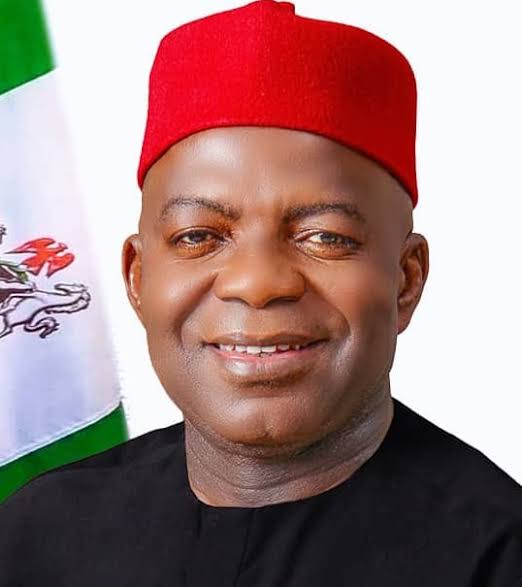
Abia State Government has explained the criteria used in recruiting the second batch of teachers for public schools, saying the exercise was guided strictly by the manpower needs of schools and conducted with transparency.
Elder Goodluck Chinedu Ubochi Honourable Commissioner for Basic and Secondary Education
Speaking during a press briefing in Umuahia yesterday, the Commissioner for Basic and Secondary Education, Elder Goodluck Chinedu Ubochi, said Governor Alex Otti had earlier approved the recruitment of 5,000 teachers, with 5,394 eventually engaged.
He said a further assessment of schools revealed additional manpower gaps, leading the Governor to approve the recruitment of another 4,000 teachers.
Unlike the first exercise, which focused mainly on applicants with education qualifications such as B.Ed and NCE, the second recruitment was opened to graduates and other qualified applicants to address shortages in technical and vocational subjects.
According to him, about 36,000 applicants applied, while about 21,000 qualified for oral interviews after a 40 per cent benchmark was adopted for the written assessment.
He explained that the benchmark was deliberately kept low to ensure inclusiveness and avoid excluding candidates who might be needed in specialised subject areas.
The final selection, he said, was based on the specific needs submitted by principals and heads of schools across the State.
“We had to match the number of qualified candidates with the actual number of teachers required in each subject and school level,” he said.
He explained that this resulted in varying cut-off marks across subjects.
For instance, while about 360 candidates qualified in Biology, only 260 teachers were required. Candidates were therefore ranked according to their scores until the available vacancies were filled.
This, he said, explains why a candidate with a higher score could be unsuccessful while another with a lower score was selected in a different subject area with greater manpower needs.
He noted that in some technical subjects where fewer applicants were available than the number required, all qualified candidates were selected.
Similarly, more than 400 applicants qualified in Marketing, but only 11 teachers were needed because the subject is not widely offered in public schools.
The Commissioner stressed that the recruitment was free from political interference, insisting that neither the Governor nor any government official had a list of preferred candidates.
He said candidates who met the required standards and fulfilled the needs of the schools were selected.
About 5,785 applicants qualified based on the general benchmark, but those not immediately engaged would be retained in a recruitment pool to fill future vacancies.
He said the State would draw from the pool as needs arise rather than conduct another large-scale recruitment exercise in the immediate future.
The newly recruited teachers are expected to begin orientation in early September before deployment for the new academic session.
The State Government, he added, is also working with the Teachers Registration Council of Nigeria to provide professional training for teachers, particularly those without formal education qualifications.
The teachers will have up to two years to acquire the necessary professional teaching skills.
The Commissioner further disclosed that a revised curriculum, adapted from the national curriculum to reflect local needs, would take effect from September.
He said successful candidates were already being directed to the Secondary Education Management Board and other relevant education agencies for onboarding ahead of deployment.
On posting, he said teachers would be deployed strictly to areas where their services were required, while the government works with communities to address accommodation challenges for those posted outside their immediate locations.
He assured the public that the exercise was designed to fill critical gaps in the education sector and ensure that qualified teachers were deployed where they are most needed.