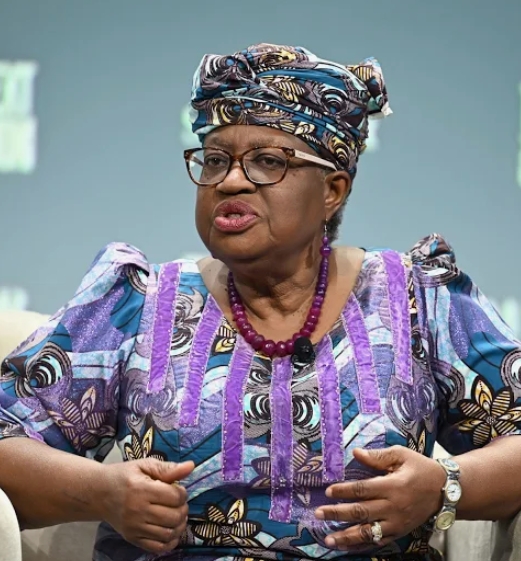
The Director-General of World Trade Organisation (WTO), Dr Ngozi Okonjo-Iweala has commended the Governor Alex Otti led Government for its efforts to diversify the states income sources and improve financial sustainability.
Dr Okonjo-Iweala gave the commendation on Thursday while speaking virtually at the Public Lecture organised by the State Government to mark the grand finale of the 35th anniversary of the creation of Abia.
The WTO Director General said aside efforts to diversify revenue, improve financial sustainability, the state devoted 77 per cent of its spending tocapital investment, more than any other state in the country.
“The state’s efforts to diversify income sources and enhance financial sustainability are bearing fruit and it is investing in the future”, she said.
Dr Okonjo-Iweala said that the Otti led administration had, within a short period, upgraded infrastructure, repaired long-neglected transport corridors and demonstrated that factories and homes in Nigeria could have a steadier supply of electricity.
She also commended the present government for clearing inherited salary and pension arrears and reducing the state’s debt burden.
Okonjo-Iweala, however, cautioned that the state still had considerable work to do, stressing that the progress achieved should not be mistaken for perfection.
“I’m not saying it is perfect. There’s still a lot of work to do, but what I see gives me hope that Abia can seize the opportunities that are emerging on the national and global stage”, the WTO director general added.
Dr. Okonjo-Iweala expressed optimism that the state’s economic potential would ultimately translate into improved livelihoods for its people.
“My warmest wish on this 35th anniversary is that the years ahead turn obvious promise into jobs, prosperity, and dignity for every Abian”, she said.
She however urged Abia Government to formalise its exports and strengthen its integration into regional and global markets.
She said that Abia had enormous economic potential, particularly in manufacturing, but needed to overcome informality and high trade costs to compete effectively in international markets.
“Abia’s future lies in outward connection, deeper integration into the economy of the Southeast, into the wider Nigeria market, into the ECOWAS region, across the African Continental Free Trade Area, and into the world beyond”, Dr Okonjo Iweala noted.
She said that the state’s leather cluster illustrated the gap between its production capacity and formal participation in international trade.
“Philips Consulting estimates that Abia’s leather cluster supplies 35 per cent of West African demand, but that zero per cent of it is exported formally and we must change this”, Dr Okonjo-Iweala said.
She identified Ariaria International Market in Aba as another demonstration of the state’s manufacturing potential, noting that it had been dubbed the “China of Africa” because of the quality of products manufactured there.
Dr Okonjo Iweala regretted that informality, limited market size, and high trade costs make it harder for entrepreneurs to scale up.
The WTO director-general said that many products manufactured in Abia were already reaching international markets, although they were often sold under the labels of other countries.
She said that global trade disruptions were creating opportunities for economies that had traditionally remained on the margins of international networks.
“The disruptions unsettling global trade today are also creating opportunities for places that have long remained on the margins of international networks”, she said.
Dr Okonjo-Iweala said that Abia could position itself as a major production and trade hub by improving infrastructure, attracting investment and focusing on sectors with strong growth potential.
“With reliable infrastructure, supportive policies, and a focus on attracting investment and enabling the buildup of a few high-potential sectors, Abia can become a node in national, regional, and even global value chains,” she said.
She also encouraged the state government to develop its manufacturing clusters and products into strong indigenous brands, pointing out that “Ariaria should become a brand in its own right”.
.Okonjo-Iweala further called for the strengthening of Umuahia as a centre for light manufacturing and administration, adding that “Umuahia must be strengthened as both a light manufacturing she administrative center”.