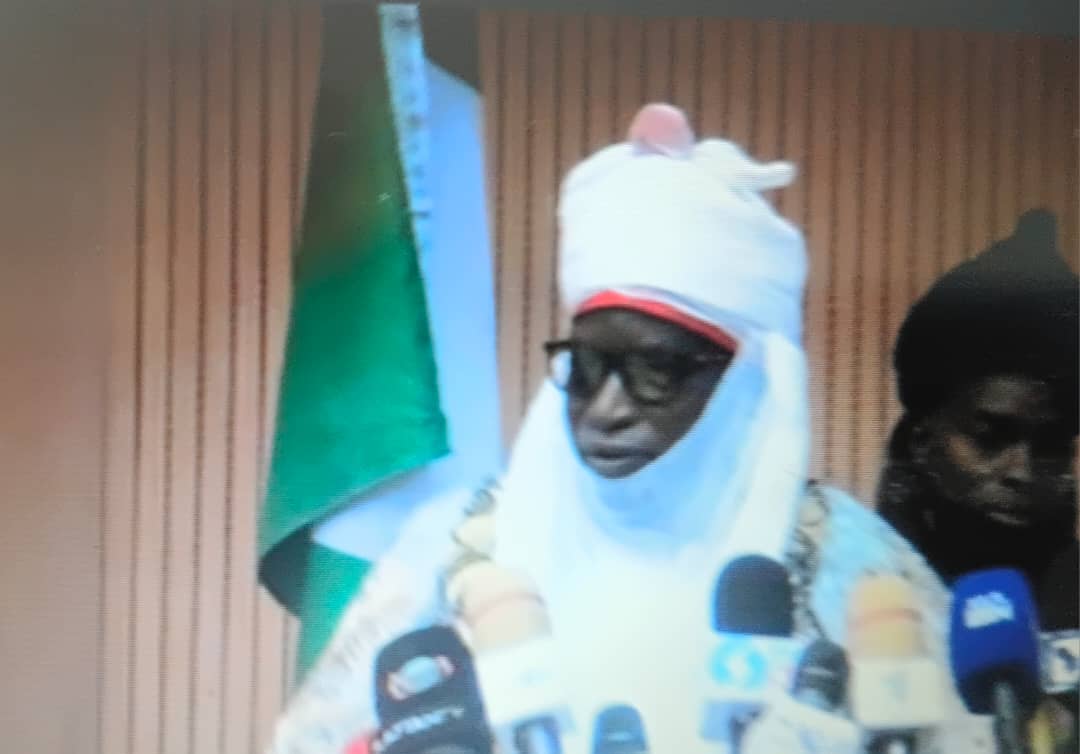
The Emir of Pai in Kwali Area Council of the Federal Capital Territory (FCT), Alhaji Abubakar Sani Pai III, has identified reliable data, community farming and skills development as critical tools for tackling poverty and improving livelihoods in Nigeria.
Pai spoke at a one-day poverty alleviation workshop organised by the Diplomatic Correspondents Association of Nigeria (DICAN) in Abuja, where journalists and development stakeholders examined practical approaches to poverty reduction and sustainable development.
The traditional ruler stressed that governments and development partners must first understand the realities and needs of vulnerable communities through accurate and credible data before designing and implementing intervention programmes.
According to him, poor or inadequate information often leads to poorly targeted interventions that fail to address the actual needs of beneficiaries.
He said effective poverty reduction requires proper planning, targeted programmes and regular assessment of community needs.
Pai identified community-based agriculture, youth empowerment, vocational training and improved market access as practical strategies capable of creating sustainable economic opportunities.
He particularly advocated community farming, suggesting that communities could cultivate between five and 10 hectares of farmland with support in the form of tractors and other agricultural equipment.
According to him, allowing communities to retain the proceeds from such agricultural activities could strengthen local economies, create jobs and generate resources for community development.
The Emir, however, warned that increased agricultural production must be supported by viable market opportunities.
He noted that many farmers remain poor because they struggle to access profitable markets, while middlemen often take a substantial share of the proceeds.
He called for stronger market linkages that would enable farmers to sell directly to larger markets, reduce post-harvest losses and earn fair value for their produce.
Beyond agriculture, Pai stressed the importance of skills acquisition and youth empowerment, saying poverty alleviation programmes should be tailored to the abilities, interests and circumstances of beneficiaries.
He identified vocational education, apprenticeship and talent development as viable pathways for young people to gain economic independence and reduce dependence on scarce formal employment opportunities.
The traditional ruler also urged greater investment in sports and other productive sectors, noting that developing young people’s talents could open alternative sources of income and livelihood.
Pai challenged journalists, particularly diplomatic and development correspondents, to study successful poverty reduction models in other countries and explore how suitable ideas could be adapted to Nigeria’s environment.
“We do not necessarily have to copy everything from elsewhere. We should identify what works, adapt it to our environment and use it to improve the living conditions of our people,” he said.
He also identified rural infrastructure, especially good road networks, as essential to economic development and poverty reduction.
According to him, improved roads would ease the movement of farmers, agricultural produce and other goods, while opening up isolated communities to trade and wider economic opportunities.
Pai called for stronger collaboration among governments, development partners, traditional institutions, the media and local communities to ensure that poverty alleviation programmes are accountable, responsive to local needs and sustainable.
The DICAN workshop brought together media practitioners and other stakeholders to deliberate on poverty reduction strategies, development initiatives and lessons from international experiences relevant to Nigeria’s development challenges.