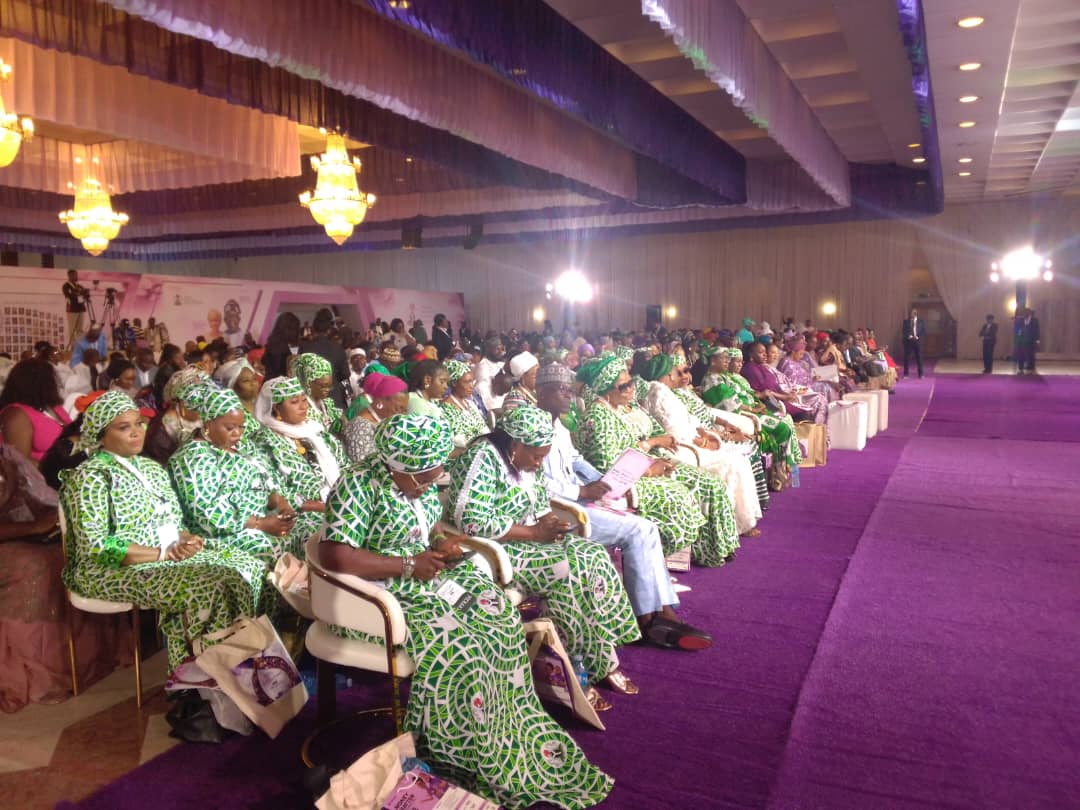
Federal Ministry of Women Affairs and Social Development has reaffirmed its commitment to advancing women’s empowerment and gender equality as it reflected on three decades of impactful service.
Speaking during a commemorative programme in Abuja today, the Director of the Development Department, Mrs. Chikoko, highlighted the Ministry’s 30-year journey, describing it as a legacy of dedication, resilience, and progress driven by visionary leadership.
She commended the Honourable Minister for her exceptional leadership and unwavering commitment to improving the lives of Nigerian women and children, noting that her vision continues to inspire transformative programmes nationwide.
“For three decades, this Ministry has built a strong foundation of excellence,” Chikoko said. “Today, we are not just celebrating history—we are activating legacy and transforming our institutional experience into modern action.”
The event underscored the importance of continuous empowerment beyond symbolic celebrations such as International Women’s Day, emphasizing that uplifting women must remain a daily commitment rooted in self-worth, discipline, and courage.
Stakeholders at the programme stressed that women’s economic empowerment remains critical to national development. They noted that when women are financially empowered, the benefits extend beyond households to industries, communities, and the broader economy.
“Empowering women is not charity—it is an economic strategy,” speakers emphasized, pointing to the growing role of women in innovation, entrepreneurship, and leadership across multiple sectors.
Also speaking, a development partner, Aisha, highlighted the role of collaboration in expanding opportunities for women across Nigeria. She said partnerships between public and private sectors are enabling women-owned businesses to scale and compete globally.
“This programme reflects the power of partnership. When we invest in women, we unlock entire economies,” she said.
Organisers also shared impact stories from recent interventions, noting significant progress in expanding economic opportunities, improving financial inclusion, strengthening families, and increasing access to healthcare and essential services.
They described the outcomes as clear evidence that targeted empowerment initiatives can drive rapid and meaningful change.
The programme concluded with a call for sustained action, urging stakeholders to view empowerment not as a one-time event but as a continuous movement toward inclusive growth and national development.
Participants were encouraged to remain committed to building a future where every woman has the opportunity to thrive, lead, and contribute fully to society.