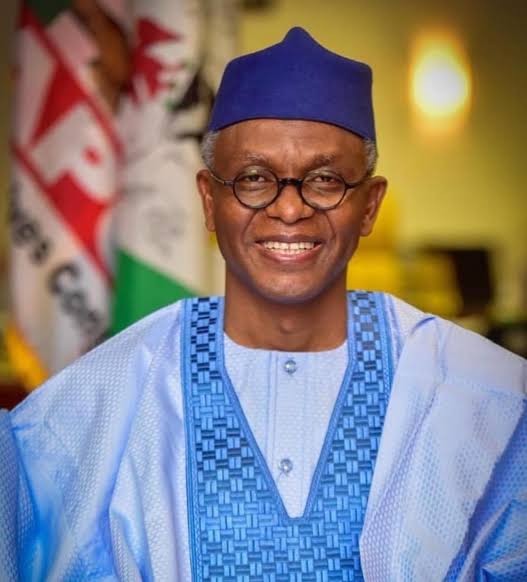
Some political leaders today are struggling with their political careers because of the bad decisions they made in the past.
As Nigerians, we often act without thinking about the future. This is especially common among many politicians who are desperate to gain power.
The truth is that sometimes a person must learn to step back and allow others to lead. It should not always be about one person holding power. Unfortunately, this is something many of our leaders fail to understand.
When Atiku Abubakar, Rotimi Chibuike Amaechi, and others formed the All Progressives Congress (APC), their main goal was to remove the government of the People’s Democratic Party (PDP) led by former President Goodluck Jonathan. This happened between 2013 and 2014 before the 2015 general elections that eventually brought the APC to power. At that time, they probably never imagined that the same party would later turn against some of them.
In a healthy democratic system, a strong opposition party is important. Opposition helps to shape democracy by acting as a watchdog and keeping the ruling party accountable.
Opposition should always be welcomed in a working democracy. However, the formation of the APC at that time appeared to be driven more by personal grievances and political ambition than by genuine concern for the welfare of ordinary Nigerians.
From the beginning, the APC focused more on opposing Jonathan and the PDP rather than on improving the lives of Nigerians. Many of those involved simply believed they deserved to be in control of the country.
Their alliance was not mainly about improving living standards. Instead, it seemed to be about gaining power and improving their own positions while the people continued to struggle.
These leaders, together with former President Muhammadu Buhari and the current President Bola Tinubu, planned and succeeded in removing Jonathan from office in 2015.
Since then, many people believe Nigeria has been moving backward instead of forward.
Ironically, some of the same politicians who helped create this situation are now gathering again under another political platform, the African Democratic Congress (ADC).
Today, many of them describe the APC as a mistake. They criticize the party and speak against it. They may understand the party better than ordinary Nigerians because they were part of its formation. However, most Nigerians judge the APC based on its performance in government.
Looking at the country’s current problems such as insecurity, economic hardship, and a weak democratic system many people believe these issues reflect poor leadership, lack of planning, and ineffective governance.
Now, some of the leaders who contributed to the current situation are facing political pressure themselves. The APC is now going after some of them one by one. The ADC has become one of the main political targets.
Recently, there have been several accusations and counter-accusations between the APC and the ADC. Some prominent members of the ADC are also facing corruption allegations and political restrictions.
This raises an important question: Is this simply a case of “what goes around comes around”?
Today, leaders like Nasir El-Rufai, former Governor of Kaduna State; Abubakar Malami, former Minister of Justice and Attorney General of the Federation; and Rotimi Amaechi, former Governor of Rivers State, are now struggling to maintain their political relevance.
These same leaders were once members of the APC. At that time, they supported its policies and promoted it to Nigerians.
Although many Nigerians are now disappointed with the APC government and its unfulfilled promises, people are also unsure about the sincerity of the ADC. After all, the formation of the ADC today looks very similar to how the APC was formed in the past politicians coming together mainly because of grievances against the ruling party.
What Nigeria truly needs is a democratically elected president who is humble, dedicated, and committed to democratic values. Such a leader should genuinely love the country and its people.
Nigeria needs a leader with a strong record of public service and a clear vision for national transformation. The country needs someone who can build stable democratic institutions, strengthen national values, and guide Nigeria toward sustainable development.
Above all, Nigeria needs a leader who truly understands the challenges facing the nation and is ready to solve them for the benefit of all Nigerians.