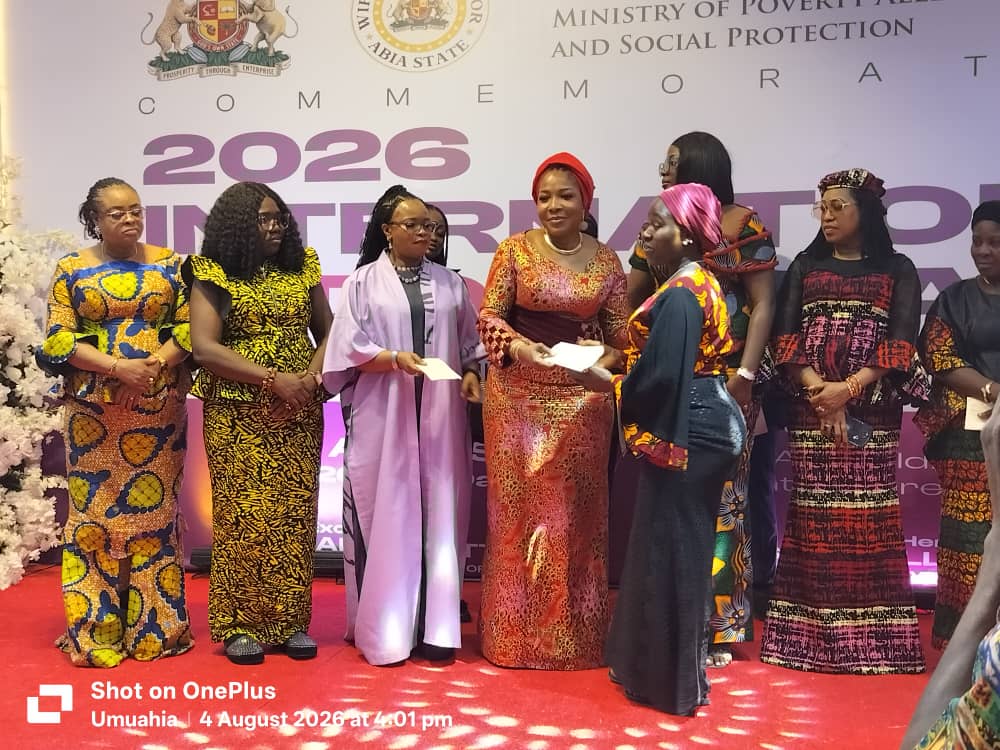
The Wife of the Abia State Governor, Mrs. Priscilla Chioma Otti, has empowered more than 600 widows in the state with cash grants to support their small businesses. She also called for greater efforts to ensure justice, dignity and economic opportunities for widows.
Speaking during the 2026 International Widows’ Day celebration in Umuahia, Mrs. Otti urged governments, communities and individuals to work together to end discrimination, poverty and social exclusion affecting widows and other vulnerable women.
She said every member of society deserves to be heard, respected and given equal opportunities to succeed. According to her, true economic progress is not measured only by wealth but also by compassion, inclusion and fairness.
Mrs. Otti explained that the theme of this year’s celebration calls on society to address poverty, inequality and discrimination while ensuring that no one is left behind.
She stressed that justice is not an act of charity but a basic responsibility, while economic empowerment is a fundamental right that helps individuals, families and communities build a better future.
According to her, investing in community development, social protection, education and inclusive economic policies will help create lasting growth and shared prosperity.
The Governor’s wife urged everyone to move beyond speeches and take practical steps to protect the rights of widows and other vulnerable people by creating opportunities that improve their lives.
She also reaffirmed her commitment to promoting justice, inclusion and equal opportunities across Abia State, expressing confidence that the state can build a society where dignity replaces discrimination, opportunities overcome poverty and hope replaces despair.
Earlier, the Commissioner for Poverty Alleviation and Social Protection, Mrs. Ngozi Felix, described the event as an opportunity to celebrate the strength and resilience of widows while drawing attention to the challenges they continue to face.
She said many widows around the world struggle with grief, financial hardship, social isolation, discrimination and the denial of their basic rights, making the annual celebration both necessary and important.
Speaking on the theme, “Justice, Dignity and Economic Power for Widows,” Mrs. Felix said every widow deserves fairness, respect and the opportunity to earn a living and provide for her family. She noted that these are basic human rights, not privileges.
She praised widows in Abia State for remaining strong despite the loss of their spouses and described them as women of courage, hope and determination whose rights and aspirations must be protected.
Mrs. Felix also commended Governor Alex Chioma Otti for making social protection a key part of his administration’s agenda, ensuring that widows and other vulnerable groups benefit from government programmes.
She further applauded Mrs. Priscilla Otti for her humanitarian efforts, especially the Dignity Homes Initiative, through which 35 fully furnished houses have been built and given to indigent widows across the 17 local government areas of the state.
According to the Commissioner, the initiative has restored hope and dignity to many widows. She added that it complements other government programmes, including financial support, vocational training, cooperative development, healthcare services and advocacy for the protection of inheritance and property rights.
She appealed to families, traditional rulers, religious organisations, civil society groups and the private sector to partner with the government in supporting widows, saying lasting change can only be achieved through collective effort.
Delivering the keynote address, Justice Enyidiya Umah highlighted several challenges preventing widows from accessing justice. These include social stigma, harmful cultural practices, denial of inheritance rights, poorly funded police family support units, negative attitudes from some law enforcement officers, poverty and corruption within the justice system.
Justice Umah called for major reforms to improve access to justice. She urged government to strengthen the police and judiciary, ensure faster and more transparent court processes, remove illegal charges imposed on vulnerable victims and adequately fund free legal aid services.
She also called for greater involvement of traditional institutions such as Umu-Ada and Ndi Ichie in ending harmful cultural practices that deny women their inheritance rights.
The jurist further recommended expanding digital justice initiatives, including the use of electronic court systems (E-Courts), to simplify legal processes, protect victims and make justice more accessible to widows across Abia State.