…Tinubu approves national policy targeting over 50 million women and girls
The Federal Government has urged state governments and the 774 Local Government Areas (LGAs) to allocate funds for the implementation of the National Policy on Menstrual Health and Hygiene Management, following its approval by the Federal Executive Council (FEC).
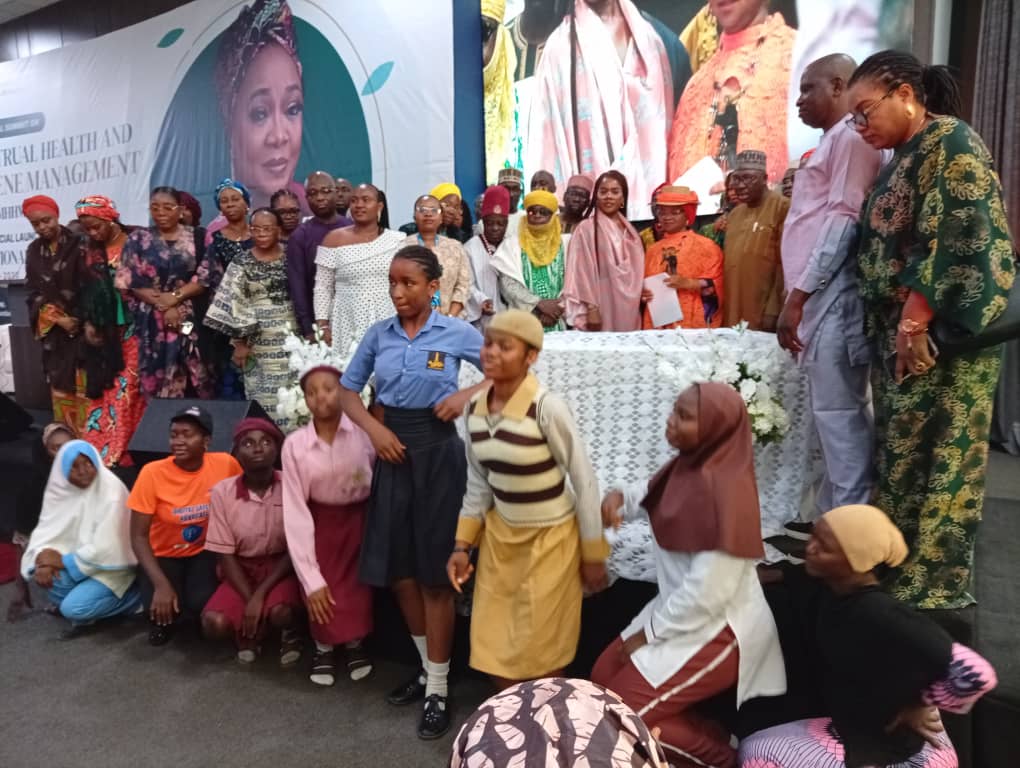
The policy was unveiled on Wednesday at the Second National Summit on Menstrual Health and Hygiene Management in Nigeria, held in Abuja, after FEC approval on October 28, 2026, under President Bola Ahmed Tinubu’s administration.
The government said the policy was designed to promote menstrual dignity, improve access to affordable sanitary products, strengthen healthcare and sanitation facilities, tackle stigma and advance the wellbeing of more than 50 million women and girls of reproductive age.
Delivering the policy address on behalf of the Minister of Women Affairs and Social Development, Hajia Imaan Suleiman-Ibrahim, Princess Dr. Jummai Idonije, Chairman of the Maryam Babangida National Centre for Women Development, described the policy as a major step towards addressing menstrual poverty and inequalities affecting women and girls, particularly in rural, poor and underserved communities.
Citing the 2024 Nigeria Demographic and Health Survey, she disclosed that 46 per cent of women aged 15 to 49 used cloth during their last menstrual period, while 54 per cent used disposable sanitary pads.
She noted that disposable pad usage stood at 66 per cent among urban women compared with 32 per cent in rural communities, while only 10 per cent of women in the lowest-income group used disposable pads, against 90 per cent in the highest-income category.
The address also cited a mid-2024 analysis indicating that only eight per cent of schools had separate toilet compartments for girls with menstrual hygiene provisions, while three per cent had basic gender-sensitive water, sanitation and hygiene facilities.
The minister said the policy was developed through collaboration involving the Federal Ministry of Women Affairs and Social Development, Population Services International (PSI), WaterAid and a National Technical Working Group, with consultations across the six geopolitical zones.
She disclosed that the FEC also approved the National Care Policy and Implementation Plan 2026–2030 and the National Costed Action Plan on Ending Violence Against Children.
State governments were urged to domesticate the menstrual health policy and establish dedicated budget lines, while LGAs were encouraged to support interventions in schools, primary healthcare facilities, internally displaced persons’ settlements and vulnerable communities.
The minister also called on corporate organisations and public institutions to provide emergency sanitary products in their restrooms and ensure clean, private sanitation spaces with safe waste-disposal arrangements.
Highlighting the economic potential of the sector, she said Nigeria’s menstrual health and hygiene market was estimated at about N184 billion annually, advocating local manufacturing, targeted financing, tax incentives and affirmative procurement measures to support women-owned businesses.
She commended First Lady Senator Oluremi Tinubu for supporting menstrual health interventions through the Renewed Hope initiative, particularly the Flow with Confidence programme, which provides sanitary products to girls in rural, displaced and underserved communities.
Representatives of the Nigerian Supreme Council for Islamic Affairs, the Ministries of Health and Social Welfare, Water Resources and Sanitation, Justice and Education, as well as UNFPA, UNICEF and Plan International, pledged support for the implementation of the policy.
They emphasised the importance of menstrual health education, access to clean water and sanitation, affordable products, public awareness, legal protection, local manufacturing and inclusive interventions for vulnerable girls and women.
In a separate address delivered by Ms Ifeoma Chiawike on behalf of Ms Sara Kuku-Niyi, Founder and Team Lead of Awareness for Adolescent Initiative, CEO of Alara Pads and founding convener of the summit, stakeholders were urged to ensure that commitments translated into measurable results.
She recalled that the inaugural summit, held on June 26, 2025, attracted 352 participants and produced six major commitments, including the development of a national policy, gender-responsive budgeting, disability-inclusive product certification, a national data hub, anti-stigma advocacy and waste-management pilot programmes in 100 schools across three states.
Presenting a document-based assessment, Chiawike said the summit scored 4.14 out of five across 11 weighted criteria, noting that strategic relevance, programme quality, partnerships and inclusion were among its strongest areas, while documentation, sustainable financing and accountability required improvement.
She proposed a National Menstrual Health and Hygiene Management Commitment Tracker to be coordinated by the Federal Ministry of Women Affairs and the National Technical Working Group, to monitor commitments, budget allocations, timelines, responsible institutions and implementation progress.
In her closing remarks, Ms Adedaume Madugbu, Director of the Child Development Department, Federal Ministry of Women Affairs and Social Development, recalled that the policy initiative began with a memorandum she presented at the 22nd Regular National Council on Women Affairs and Social Development in Abuja, which subsequently approved the development of the national policy.
She commended the minister, the Permanent Secretary, development partners, members of the National Technical Working Group, civil society organisations and other stakeholders for their contributions to the policy’s development.
The summit ended with a renewed call for governments, development partners, private institutions and communities to move beyond policy declarations and ensure adequate financing, effective coordination, improved facilities, affordable menstrual products and transparent accountability.
Stakeholders maintained that the true measure of the policy’s success would be its tangible impact on the lives of Nigerian women and girls.