A few weeks ago—precisely on March 17, 2026—controversial activist and publisher of Sahara Reporters, Omoyele Sowore, visited Aba, the commercial nerve centre of Eastern Nigeria. His stated purpose was to campaign for the release of jailed Biafran separatist leader, Nnamdi Kanu.
However, emerging facts from that visit—particularly his utterances during and after the trip—suggest that the mission may have had a more troubling undertone. Rather than a genuine advocacy effort, it appeared designed to cast aspersions on the growing popularity and performance of the Abia State Governor, Alex Otti.
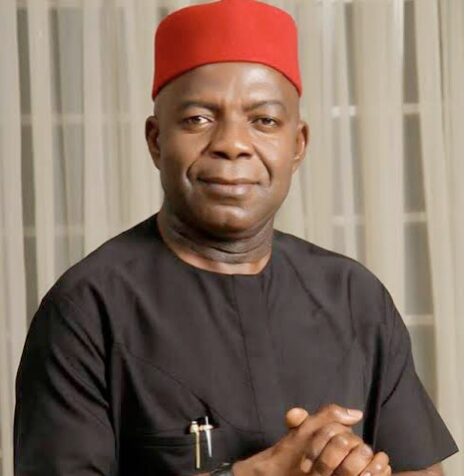
Governor Otti has, within a short span since assuming office on May 29, 2023, transformed Abia State from what was widely regarded as one of the least developed states in Southern Nigeria into one of the fastest-developing states in the country. This remarkable turnaround has earned the description “The Abia Miracle” among many analysts and commentators.
To properly understand the controversy surrounding Sowore’s visit, it is important to examine the context. First, Nnamdi Kanu is held by federal authorities, and his release lies primarily within the purview of the federal government, potentially through a presidential pardon. Logically, any meaningful campaign for his release would be directed toward centres of political power such as Abuja or Lagos—not a marketplace in Aba. This raises a fundamental question: what role do traders in Ariaria Market play in such a campaign? The answer is simple—none.
Furthermore, Sowore reportedly spent less than an hour in Ariaria. There is little evidence to suggest he had previously visited Abia State, especially before the current administration. Had he done so, he would have witnessed firsthand the severe infrastructural decay that once defined the state. He would also have been able to contrast that past with the ongoing transformation under Governor Otti.
Even the road leading to Ariaria Market, which Sowore traversed, has seen notable improvement. The cleaner environment he acknowledged today stands in stark contrast to the past, when the area was overwhelmed by filth and neglect. The notorious flooding problem known as “Ofe Obara,” which plagued the Ariaria axis for years, has now been resolved—something previous administrations failed to achieve.
This pattern of renewal is not limited to Aba alone; it reflects a broader statewide transformation.
Before Governor Otti took office, Abia struggled across multiple sectors. Infrastructure was in disrepair, roads were notoriously bad, and public services were failing. Today, the narrative has changed significantly. Over 400 roads have been reconstructed within two years. The education sector has received substantial investment, with about 20% of the state budget allocated to it. Lost accreditations in tertiary institutions have been restored, and massive construction projects are ongoing across campuses.
At the basic education level, the recruitment of 5,000 teachers through a merit-based process has strengthened the system—though such achievements are not immediately visible during a brief visit like Sowore’s. Similarly, the clearing of salary arrears and the consistent payment of workers’ salaries by the 28th of each month reflect a renewed commitment to governance.
In healthcare, the administration has embarked on large-scale reconstruction and upgrading of facilities across primary, secondary, and tertiary levels. The recruitment of over 700 health professionals further underscores this commitment.
Yet, governance goes beyond physical infrastructure. It is fundamentally about systems, processes, and institutional reforms. It involves transparency, accountability, and efficient service delivery. In this regard, the Otti administration has made significant strides.
From the outset, Governor Otti focused on restructuring governance institutions—introducing merit-based recruitment, enforcing rule-based administration, ensuring fiscal discipline, and promoting transparency in public procurement. Ministries, Departments, and Agencies have been reorganized for efficiency, while a culture of discipline, inclusiveness, and excellence has been instilled across the public service.
Against this backdrop, Sowore’s criticisms appear superficial. His approach reflects a tendency to judge governance by surface-level observations rather than by deep structural reforms. His criticism without any iota of facts or objectivity equates to a “naked dance” in Aba and can only be understood as a misreading of the realities on the ground.
The truth remains that Governor Otti has laid the foundation for a smart and effective governance system in Abia State. The transformation currently visible is only the beginning of what promises to be a sustained and far-reaching development trajectory.