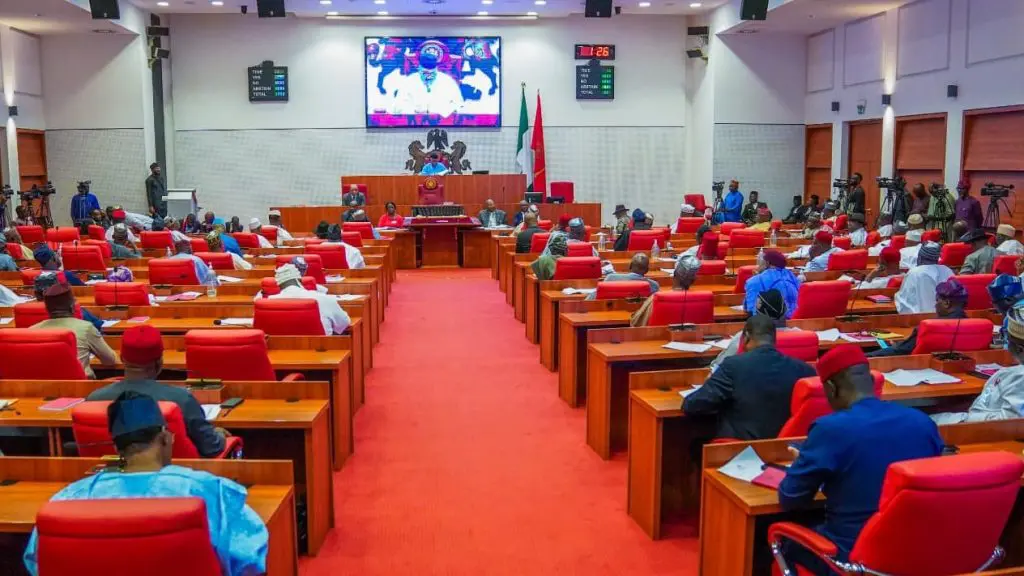
The Nigerian Senate has called on the Federal Government to revert to the former contractor payment system and abolish the current envelope budgeting framework, citing persistent delays in payments and inefficiencies in budget implementation.
The resolution followed an interactive session between the Senate Committee on Finance and members of the Federal Government’s Economic Management Team in Abuja.
Chairman of the Committee, Senator Sani Musa, said submissions from Ministries, Departments and Agencies (MDAs) during recent budget defence sessions revealed that the centralised contractor payment system has left many contractors unpaid for projects executed in 2024 and 2025.
According to him, the situation has slowed project delivery and reduced the tangible impact of government spending on citizens.
“Based on submissions by heads of agencies, the envelope budgeting system has failed and must be replaced with a priority-based model,” Musa declared. “The incremental allocation model has outlived its usefulness. It encourages routine expenditure expansion instead of strategic prioritisation.”
He argued that MDAs should be permitted to directly pay contractors they engage, rather than rely on a centralised structure that has created bottlenecks.
The session was attended by the Minister of Finance and Coordinating Minister of the Economy, Wale Edun; the Minister of Budget and National Planning, Atiku Bagudu; the Accountant-General of the Federation, Dr. Shamseldeen Babatunde Ogunjimi; and the Chairman of the Nigeria Revenue Service, Zacch Adedeji.
Musa stressed the need for strict adherence to the annual budget cycle, insisting that budgets must remain time-bound, measurable and performance-driven. He also called for stronger collaboration between the executive and the National Assembly to reform operational systems for improved accountability and efficiency.
Other committee members echoed similar concerns, urging the economic team to strengthen planning, execution and timely disbursement of funds to contractors.
In response, the Federal Government delegation expressed optimism about the proposed ₦58.472 trillion 2026 budget, describing its outlook as positive.
The team clarified that Nigeria’s total public debt of ₦152 trillion does not entirely represent fresh borrowing. According to the officials, about ₦30 trillion was inherited under the Ways and Means facility, while ₦9 trillion arose from exchange rate adjustments. They added that new borrowing since 2023 stands at approximately ₦20 trillion.
They assured lawmakers that future financing would prioritise growth-enhancing and capital projects submitted by MDAs, subject to review by the Economic Management Team and presidential approval.
At the start of the session, the committee also resolved to write to President Bola Ahmed Tinubu, urging the removal of Hussaini Ishaq Magaji as Registrar-General of the Corporate Affairs Commission for repeatedly failing to appear before the Senate Committee on Finance.
The Senate maintained that urgent reforms to both the contractor payment system and the budgeting approach are necessary to restore confidence, ensure accountability and deliver measurable economic benefits to Nigerians.