Politics in Rivers State has never been driven by sentiment or permanent loyalty. It is a terrain defined by power, control of state resources, and strategic alignment with the centre. Those still waiting for former Governor Nyesom Wike to “pull magical strings” that would force Governor Siminalayi Fubara to kneel are either misunderstanding Rivers political history or deliberately ignoring its well-established patterns.
A review of the state’s political evolution shows a consistent reality: every sitting governor in Rivers State eventually becomes more powerful than his predecessor. Influence only lasts for as long as the occupant of Government House allows it. Once power changes hands, loyalties shift swiftly, and authority consolidates around the sitting governor.
From 1999 to 2007, Dr. Peter Odili rose through the PDP power blocs but soon became the dominant political force himself. By his second term, Odili had neutralised all internal threats and was firmly in control of Rivers politics.
His successor, Rt. Hon. Chibuike Rotimi Amaechi (2007–2015), emerged through Odili’s structure but eventually broke free. After early tensions, Amaechi built strong federal alliances, challenged the PDP establishment, defected to the APC, and rose to national prominence, effectively ending Odili’s influence in the state.
Nyesom Wike (2015–2023) followed a similar path. Installed by Amaechi, Wike initially projected loyalty but quickly dismantled Amaechi’s political structure. By his second term, Amaechi had no meaningful control in Rivers State. Wike became the most powerful political figure the state had seen, deftly navigating PDP and APC interests while consolidating authority at home.
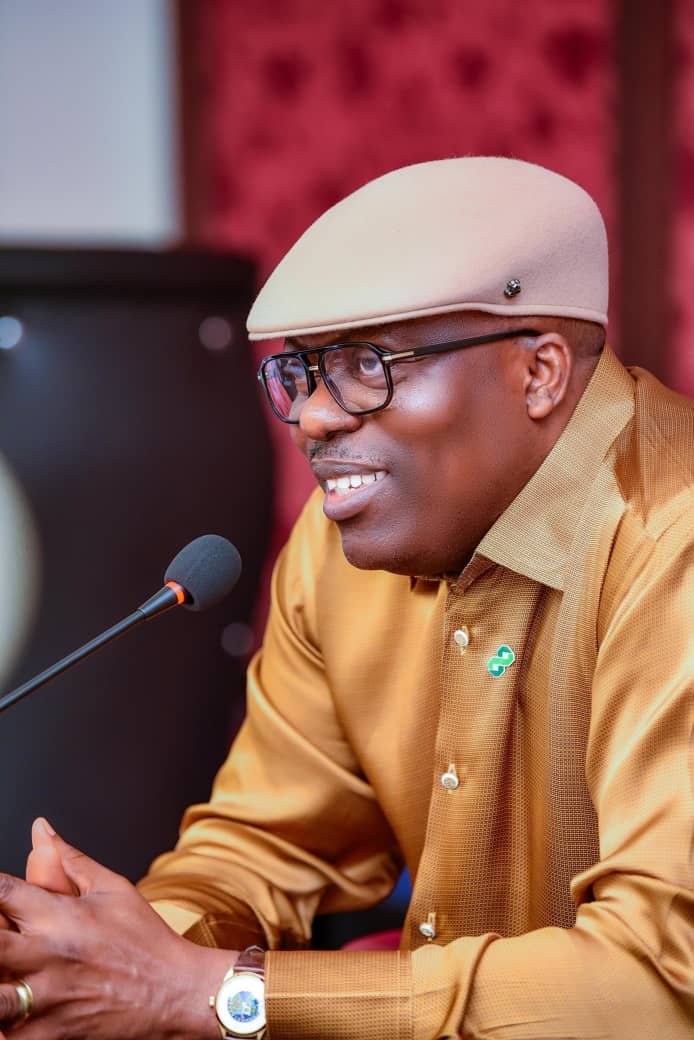
Today, history is repeating itself. Governor Siminalayi Fubara, installed by Wike in 2023, began his tenure with visible loyalty. However, once impeachment threats emerged, political survival instincts kicked in. Fubara quietly aligned with the Presidency, and federal power intervened decisively to protect him. That moment marked a turning point. Control of Rivers political structures shifted rapidly, and Wike’s grip weakened almost overnight.
This is not accidental. Rivers State, alongside Lagos, remains one of Nigeria’s most economically and politically strategic states. Any sitting governor automatically becomes a major stakeholder in national power calculations. Presidents and ruling parties cannot afford instability in Rivers, which explains why federal interest in the state is always intense.
Wike understood this reality during his tenure. Despite his public battles with the Buhari administration, he maintained strategic cooperation behind the scenes, approving federal requests and aligning when it served his interests. His eventual reward—the FCT ministerial appointment under President Bola Tinubu—was a direct consequence of that pragmatism.
However, the political tide has shifted. Governor Fubara is now the sitting authority in Rivers State. He has aligned fully with the Presidency and, in doing so, secured stronger backing than any former governor can command. In political terms, he is now APC 001 in Rivers State, a position that carries both symbolic and practical dominance.
Wike, by contrast, remains politically constrained. Fully joining the APC would place him in a crowded field of power brokers where his influence would be limited. As such, he operates in a grey space between parties, unable to exert the kind of absolute control he once enjoyed in Rivers.
In Rivers politics, timing and positioning matter. Those who officially align first become senior stakeholders; latecomers adjust accordingly. By this logic, even if Wike eventually joins the APC, he would do so under a structure already controlled by Fubara.
President Tinubu, for his part, has little incentive to undermine an APC-aligned governor who has submitted to his leadership and stabilised a strategic state. The centre will always protect its own interests.
This reality should serve as a note of caution to Rt. Hon. Martin Amaewhule and members of the Rivers State House of Assembly. The governor’s renewed confidence reflects stronger presidential backing. His political moves, including his decamping without seeking the blessing of the FCT minister, were acts of calculated survival, not rebellion.
The message is clear: accept the present political order and work for the peace and development of Rivers State. Continual confrontation against a governor who enjoys popular support and federal backing will only deepen instability.
Deacon Chukwuemeka Egejuru anipr, writes from Umuahia, Abia State – Nigeria.