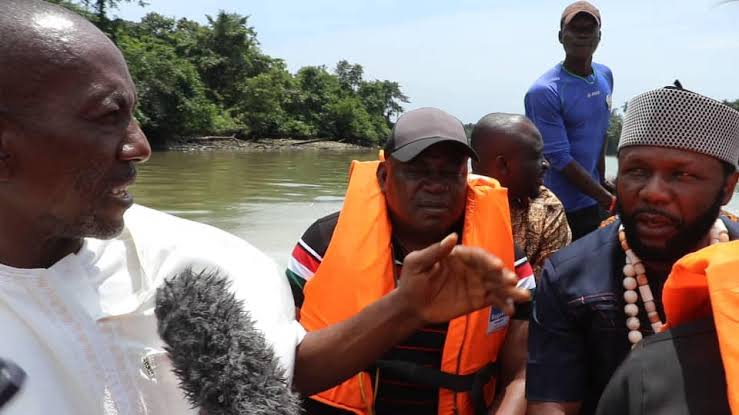
Obeaku-Ndoki, a coastal community tucked within Abia State, is steadily emerging as one of Nigeria’s most ignored yet strategically positioned maritime corridors. For decades, national conversations on seaports and ocean access have been dominated by Lagos and Port Harcourt — two cities deeply entrenched in the country’s economic narrative. Yet few Nigerians know that Obeaku-Ndoki, sitting quietly along the Imo River and linked to the Atlantic through the iconic Azumini Blue River, possesses a maritime advantage that rivals and even surpasses some of Nigeria’s operational ports.
Geographically, Obeaku-Ndoki’s nautical distance to the Atlantic Ocean is shorter than that of established ports such as Port Harcourt. This is not a matter of speculation but an overlooked geographical fact. Despite this enviable proximity, the community’s potential has remained largely untapped, its natural advantages buried under years of infrastructural neglect and political inattention.
A Sleeping Deep-Sea Port Opportunity
Experts and community advocates envision a radically different reality: a deep-sea port in Obeaku-Ndoki that would immediately shift the economic landscape of the South-East and parts of the South-South. With its strategic location, the community could serve as a direct export and import channel for the region’s major industrial and commercial centres — Aba, Nnewi, and Onitsha.
The ripple effect would extend beyond Abia State, boosting regional economic integration, strengthening supply chains, and enhancing Nigeria’s competitiveness in global maritime trade.
A Community Rich in Promise but Poor in Infrastructure
Instead of cranes, terminals, and cargo vessels, Obeaku-Ndoki’s coastline is currently home to fishing boats and unfulfilled expectations. The area lacks the basic infrastructure needed to catalyse its transformation — a clear reflection of the longstanding marginalisation experienced by many Ndoki communities.
Despite being naturally connected to waterways that lead to the Atlantic, the region has seen minimal development support from both state and federal governments. The result is a vast economic opportunity left to gather dust while Nigeria continues to grapple with congested, overstretched port systems elsewhere.
A National Irony and a Policy Failure
The contrast is stark: while Onne Port struggles with infrastructural decay, capacity shortfalls, and chronic congestion, Obeaku-Ndoki — closer to the ocean in nautical terms — lies dormant. This irony, stakeholders say, should provoke urgent reassessment of Nigeria’s maritime development priorities.
Why spend billions expanding Lagos and Onne when a naturally suitable maritime corridor in Abia State remains sidelined? Why centralize maritime commerce in already struggling hubs when decentralization could democratize economic opportunities and reduce pressure on existing ports?
A Call for Visionary Leadership
Obeaku-Ndoki is not seeking handouts. It is demanding recognition — recognition of its strategic value, its potential to drive regional growth, and its right to equitable development. Realising this potential requires bold leadership willing to break old patterns and embrace new possibilities.
Establishing connecting road and rail infrastructure
Implementing supportive trade and investment policies
With these, Ndoki could quickly evolve from an obscure coastal community into a dominant maritime gateway for Nigeria and West Africa.
Ijere Johnmartins
Time Is Running Out
Obeaku-Ndoki is a sleeping seaport giant — closer to the Atlantic than many imagine, rich in untapped potential, yet still treated as an afterthought in national planning. As Nigeria searches for solutions to its port congestion and seeks to stimulate regional economies, the question is no longer whether Obeaku-Ndoki has the potential to transform the country’s maritime landscape.
The real question, as posed by Ijere Johnmartins, Publicity Secretary of the Ndoki Union Youth Wing, is simple and urgent:
How much longer will Nigeria ignore one of its greatest strategic maritime opportunities?