A coalition of civil society organisations has warned that Nigeria’s worsening rural underdevelopment is driven less by inadequate funding than by weak governance structures that undermine local government autonomy and accountability.
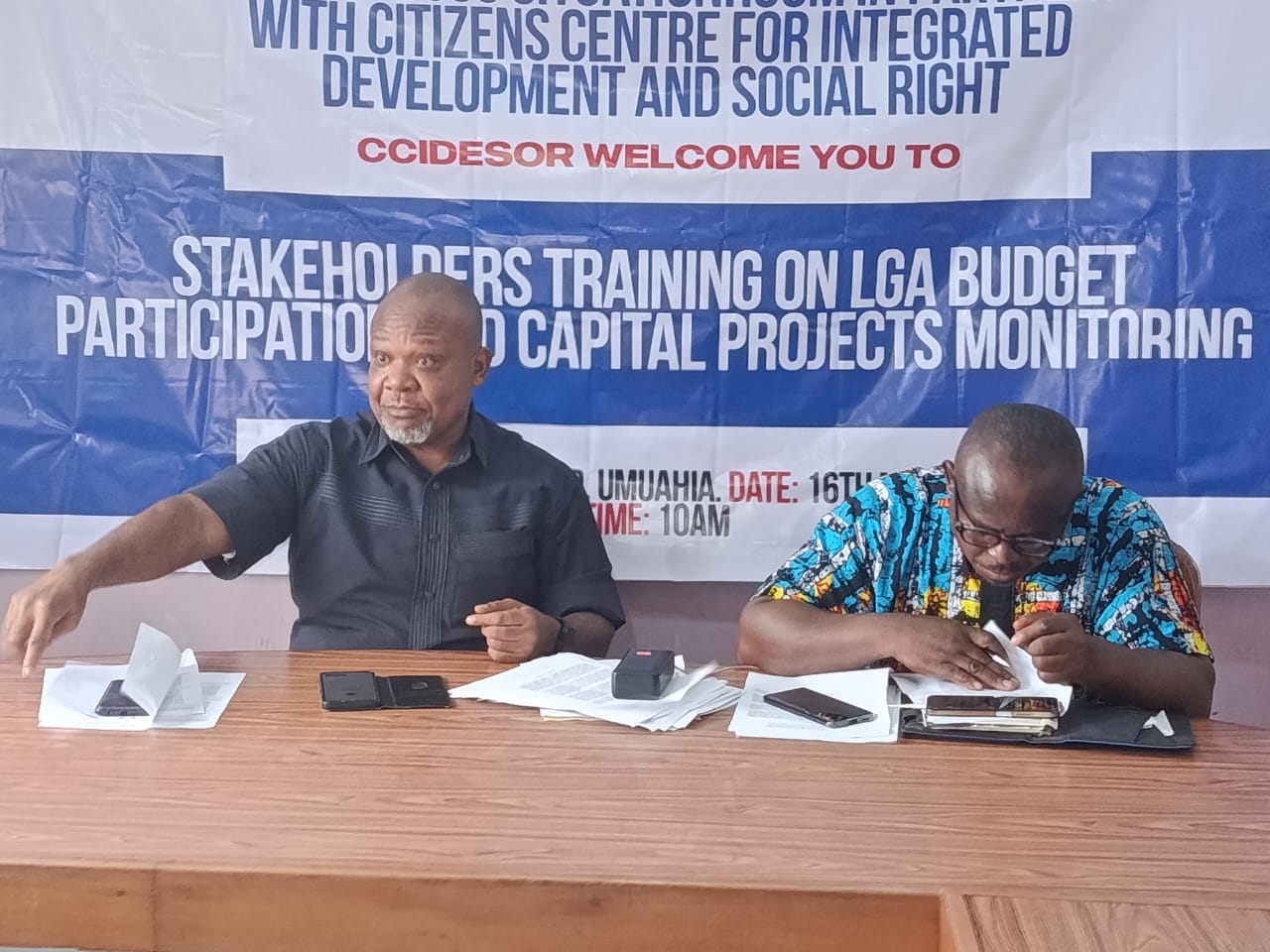
At a media briefing in Umuahia, the Citizens Centre for Integrated Development and Social Rights (CCIDESOR), in partnership with the Nigeria Civil Society Situation Room, presented findings from field monitoring conducted across selected local government areas in south-east Nigeria.
The assessment covered pilot communities in Abia, Imo and Enugu states, spanning rural, semi-urban and urban areas, including Bende, Umuahia and Aba South. It examined the first phase of a programme carried out between February and March 2026.
Speaking on behalf of CCIDESOR’s Executive Director, Dr Emeka Ononamadu, the organisation’s State Administration and Communication Officer, Dr Temple Nwosu, said the findings reveal a stark disconnect between federal allocations to local governments and tangible development outcomes.
“Substantial public funds are reaching local government areas, but they are not translating into meaningful improvements in people’s lives,” Nwosu said.
The report argues that the core issue lies in the absence of genuine financial, administrative and political autonomy for local governments. It identifies the State Joint Local Government Account system, established under Section 162 of the 1999 Constitution, as a major constraint.
According to the findings, funds allocated to councils are often diverted, reallocated or tied to state-determined projects, limiting local authorities’ ability to address community-specific needs.
Field observations also revealed a pattern of underperforming and misaligned projects. In many instances, capital projects were few, poorly prioritised or disconnected from core constitutional responsibilities such as primary education, primary healthcare, rural infrastructure and agricultural development.
The briefing further highlighted weak transparency mechanisms as a critical concern. Citizens frequently lack access to budget information, while overlapping responsibilities between state and local governments make it difficult to track spending or assign accountability.
Political interference was also cited, with local officials reportedly constrained by the risk of suspension or undue influence from higher levels of government, undermining their decision-making independence.
The consequences, the groups noted, are evident across rural communities: deteriorating school infrastructure, under-equipped health centres and stagnant agricultural development.
The report calls for urgent constitutional reform, particularly an amendment to Section 162 to abolish the joint account system and ensure direct allocation of funds to local governments.
It also recommends mandatory public disclosure of local government budgets and expenditures, stronger legislative oversight, and the establishment of citizen-driven accountability frameworks.
Beyond legal reforms, the groups urged state governments to transition from control to support roles allowing elected local officials to operate independently while offering technical assistance where necessary.
Civil society organisations were encouraged to expand monitoring efforts and deepen citizen engagement, while the media was tasked with strengthening investigative reporting and raising public awareness of local government finances.
Citizens, the report emphasised, must also play a central role by demanding transparency, participating in budget tracking and engaging actively in local governance processes.
The coalition described the current political climate as a rare opportunity to implement far-reaching reforms capable of transforming grassroots governance in Nigeria.
Failure to act, it warned, risks entrenching corruption, deepening poverty and further eroding public trust in democratic institutions.
“Local government autonomy is not just a constitutional issue,” Nwosu said. “It is fundamental to improving service delivery, strengthening democracy and unlocking development at the grassroots.