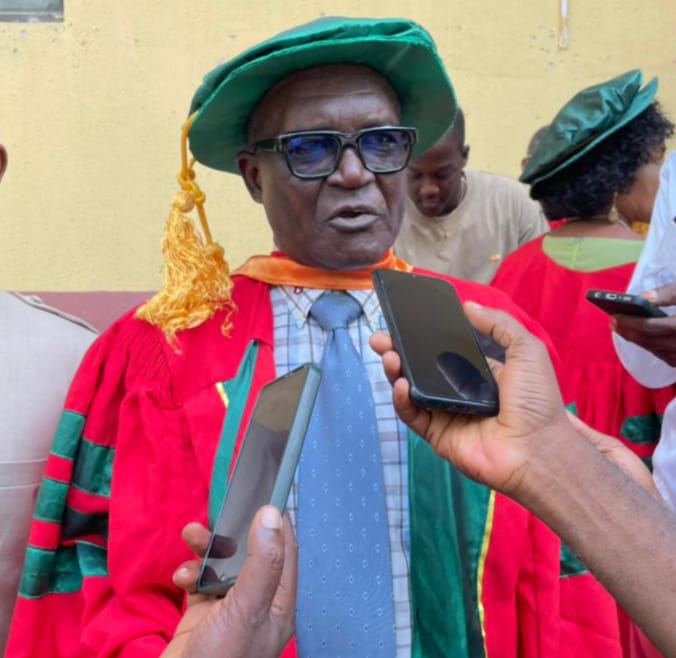
The Michael Okpara University of Agriculture Umudike(MOUAU), has recorded another resounding feat in research and development as a Professor of Animal Nutrition/Breeding Genetics, Professor Nnamdi Mbanefo Anigbogu, uncovered methods of using sawdust, rice hulls and other organic waste as animal feed.
Delivering the 67th Inaugural Lecture of the university recently, titled “Crude Harvest Transformation: Waste to Wealth”, Prof Anigbogu revealed that materials such as sawdust, rice hulls and other wastes can be scientifically processed into quality animal feed, thereby reducing the high cost of feed and the burden of waste disposal in Nigeria and globally.
He said these wastes when treated increases from 0.1 percent protein content to five percent with methionine, lysine and other essential amino acids, adding that animals such as turkeys, goats, pigs and chickens fed with the processed feed perform excellently, with improved productivity and significantly reduced feeding costs.
The Agric scholar revealed that Nigeria spends huge sums on physical organic waste management, with most wastes dumped in open landfills where valuable live enzymes are lost.
He explained that with his research, three methods were discovered to manage and produce live enzymes from organic waste under a controlled environment, which he said are now being used successfully as animal feed, producing benefits for government and farmers.
Prof Anigbogu further stated that the live enzymes produced are compounded into commercial forms known as “zoo-fortifying” agents, attracting increasing interest from farmers who now seek partnerships to produce the enzymes locally.
He emphasized that the feeds derived from sawdust, rice hulls and similar wastes are cheaper, readily available and environmentally friendly, with no identified pitfalls.
The professor urged the Federal Government to enact laws promoting the use of organic waste as animal feed, encourage the establishment of bio-productive centres for live enzyme production, and support the development of local chemicals for feed formulation.
He stressed that Nigeria’s heavy dependence on imported feed additives has continued to drive up the cost of animal production.
In his recommendations, Prof Anigbogu called for deeper studies of Nigeria’s ecosystem and biodiversity to discover untapped microbes, fine chemicals and metabolites for balanced animal feed production. He also advocated the establishment of Chemical and Nutritional Analytical Centres through public-private partnerships to reduce foreign exchange spent on overseas laboratory analyses.
Highlighting the broader benefits, he said the utilization of organic waste for animal feed could help fight hunger, improve food and nutritional security, reduce pollution, cut municipal waste management costs, create jobs, boost farmers’ income and conserve foreign reserves, adding that it would also reposition farming as a noble and economically viable profession.
He concluded that organic wastes such as rice hulls, sawdust, municipal waste, poultry excreta, water hyacinth, mango kernels, animal by-products, brewer’s grains, fish waste, tuberous root waste, rumen content and industrial offal should be fully harnessed to drive Nigeria’s animal feed technology and sustainable development agenda.
In his remarks, the Vice-Chancellor, Prof. Maduebibisi Ofo Iwe, who was represented by the Deputy Vice-Chancellor Research and Development, Prof. Ursula Ngozi Akanwa, commended the lecturer for doing justice to the topic.
He noted that limited knowledge often discourages active engagement in such innovations and called on government to encourage farmers through subventions and targeted support, especially for those capable of producing animal feed locally and stressed the need to reduce dependence on foreign feeds by leveraging available research outputs to boost local production.
The lecture, he explained, clearly demonstrated the transition from waste to wealth, highlighting two research procedures used to convert waste materials into inputs for animal production. According to him, the presentation has dispelled the long-held belief that waste has no value.
Prof Iwe added that with materials such as sawdust, Nigeria can now locally produce animal feed with adequate protein content to support animal growth, increase protein production, and ultimately enhance protein consumption, making feed importation unnecessary.