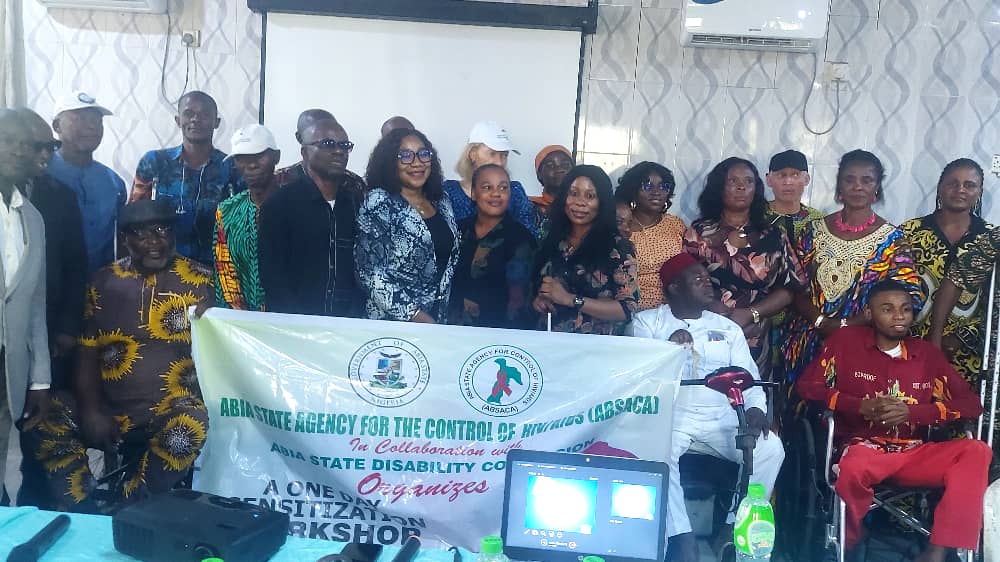
The Abia State Agency for the Control of AIDS (ABSACA) has held a one-day sensitization program for persons with disabilities in the Abia Central Senatorial Zone. The event took place at Gado International Hotels and Garden, Umuahia. Its goal was to increase awareness and improve access to HIV/AIDS prevention, treatment, care, and support services.
This program is part of ABSACA’s ongoing effort to ensure that everyone, including vulnerable groups, benefits from the state’s HIV response.
During the opening session, the Director-General of ABSACA, Dr. Uloaku Ukaegbu, described persons with disabilities as a vulnerable group that often faces challenges in the fight against HIV and AIDS. She explained that they are at higher risk of HIV infection because of stigma, discrimination, lack of correct health information, and social exclusion. These challenges can stop them from getting tested or seeking treatment on time.
She said, “It is our duty to inform, empower, and educate persons with disabilities so they know where to get help, get tested, receive treatment, and learn how to protect themselves.”
Dr. Ukaegbu praised the participants for attending in large numbers and assured them that ABSACA is committed to making sure no group is left behind. She added that the agency has developed inclusive health programs to meet the needs of vulnerable groups, including persons with disabilities.
The program included several educational sessions on:
HIV situation in Nigeria
Basic facts about HIV and AIDS
Basic facts about sexually transmitted infections (STIs)
Personal health and hygiene
Child abuse and its effects
Harmful traditional practices
Adolescent lifestyle and sexual behaviour
Drug abuse and trafficking
Contemporary social problems in Nigeria
A Monitoring and Evaluation Officer at ABSACA, Mr. Chinedu Iroh, presented data on HIV in Nigeria. He stated that the national HIV prevalence rate is 1.4% among adults aged 15–49, with about 1.9 million Nigerians living with the virus.
Mr. Chinedu Iroh. ABSACA’s Mobilization and Evaluation Officer, and also one of the facilitator.
In Abia State, the HIV prevalence rate is 2.1%, which is higher than the national average, and over 51,048 people are currently receiving treatment.
He stressed the importance of meeting the UNAIDS 95-95-95 targets:
95% of people with HIV should know their status
95% of those who know their status should be on treatment
95% of those on treatment should achieve viral suppression
He encouraged communities to participate actively so Nigeria can end AIDS as a public health threat by 2030.
A consultant, Dr. Chiukpia Ogwara, gave a lecture on harmful traditional practices and adolescent behaviour. He described adolescents as curious and energetic, often engaging in risky behaviours without thinking about the consequences. He said adults need to understand their behaviour and environment to guide and support them better.
Another ABSACA facilitator, Mr. Ndubuisi Kanu, spoke on child abuse. He defined child abuse as any form of harm to a child, including physical, sexual, emotional abuse, and neglect. He noted that bullying can fall under more than one category. He also explained that a child who dies from abuse is called a victim, while one who survives is called a survivor. The person who commits the abuse is known as the perpetrator. He advised caregivers to always pay close attention to their children’s needs.
A major highlight of the event was the free HIV testing, followed by an interactive question-and-answer session, where participants shared ideas to help improve the program.
Mr. Ndubuisi Kanu. ABSACA’s M&E Officer
Those present included persons with different types of disabilities, such as limb, visual, hearing, and speech impairments, and persons with albinism. To support participants with hearing impairments, sign language interpreters Ekechukwu Esther, the State Sign Language Interpreter and official interpreter to the Governor, and Elechi Loveth from the Abia State Disability Commission were present.