The Abia State Government has begun a major effort to restore and protect forest reserves across the state as part of a broader plan to address environmental challenges and climate change.
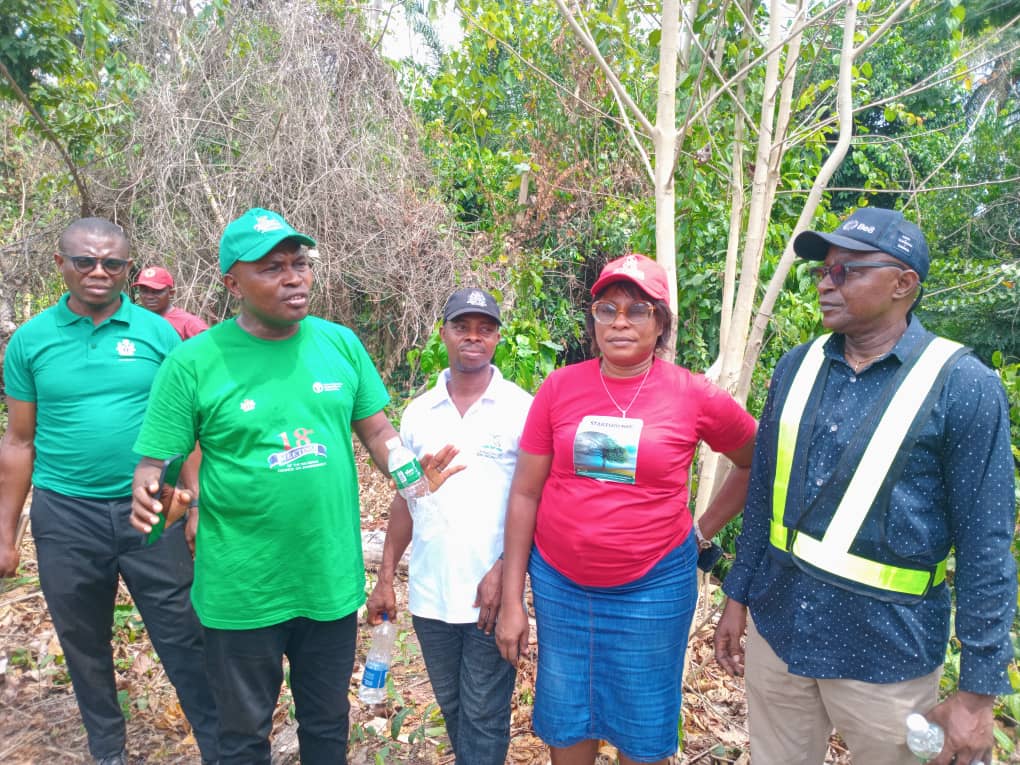
Officials from the Abia State Ministry of Environment recently carried out a supervision and monitoring exercise at several forest reserves. The exercise included boundary clearing and fire tracing at the Amabanta Ovim Forest Reserve in Isuikwuato Local Government Area, the Agukwu Forest Reserve in Amaekpu Ohafia, and the Nkalunta Forest Reserve in Ikwuano Local Government Area.
Speaking during the exercise, the Commissioner for Environment, Mr. Philemon Asonye Ogbonna, represented by the Permanent Secretary of the ministry, Mr. Ikechukwu Oriuwa, said the programme reflects the government’s commitment to ensuring that all sectors of governance are working effectively.
He explained that the initiative follows the policy direction of the Governor of Abia State, Alex Otti, who has repeatedly stated that every sector of his administration must deliver visible results to the people.
According to the commissioner, the current exercise is only the first stage of a larger plan that will include the re-surveying and re-gazetting of forest reserves throughout the state. He said proper mapping and documentation will help the government determine the current status of the reserves and strengthen conservation efforts.
“Our intention after this exercise is to re-survey and re-gazette our forest reserves so that we clearly know what belongs to government and what belongs to communities,” he said.
Ogbonna noted that properly managed forest reserves are important for climate protection and could also attract climate finance opportunities. He added that the government plans to promote tree planting and discourage deforestation across the state.
“The promise of His Excellency that every sector will work is being fulfilled. The environment sector is active and receiving serious attention,” he added.
The Director of Forestry in the Ministry of Environment, Mr. Ikpegbu John, who led officials around the project sites, explained that the boundary clearing and fire tracing exercise is important for effective forest management.
He said the programme was designed to also strengthen government presence in communities where the forest reserves are located.
According to him, young people from the host communities were engaged and employed during the exercise, allowing them to participate in protecting the forests while earning income.
“The essence of this activity is to establish government presence in these forest reserves and to make communities aware that these lands are protected areas,” he said.
John explained that the exercise started at the Amabanta Ovim Forest Reserve in Isuikwuato before moving to the Agukwu Forest Reserve in Amaekpu Ohafia and later to the Nkalunta Forest Reserve in Ikwuano.
He added that cooperation from community members played a major role in the success of the exercise. In many places, the pillars that previously marked the forest boundaries had disappeared over time, making it difficult to identify the limits of the reserves.
However, elders and youths in the host communities helped officials retrace the boundaries by relying on their knowledge of the land.
“With the assistance of community members we were able to identify and trace the boundaries again. This helps us establish a clear line between land belonging to government and land belonging to the communities,” he said.
He noted that the process allows communities to continue legitimate activities on their own land while ensuring that government-protected forest areas remain preserved.
Officials said the exercise will also support ecological regeneration. Once the forest areas are cleared and protected, vegetation can begin to grow again naturally without direct planting.
In addition, the government plans to return to the reserves to begin organised re-afforestation programmes in areas where forest cover has been greatly reduced. This will involve planting new seedlings to replace degraded sections of the forests.
According to John, the long-term goal is to rebuild healthy forest ecosystems that can support climate adaptation and biodiversity while also creating opportunities for revenue through global climate finance initiatives.
He stressed that community participation will remain an important part of the programme, with local residents continuing to be involved in maintaining and protecting the reserves.
For many host communities, the project offers both environmental and economic benefits, as it provides temporary jobs while helping to protect natural resources that support local livelihoods.
Forest reserves play an important role in biodiversity conservation, climate stability and sustainable development. By restoring and properly managing its forest reserves, the Abia State Government aims to protect natural resources, support local communities and contribute to global climate action.
Officials say the initiative represents an important step toward balancing development, environmental protection and community participation across the state.