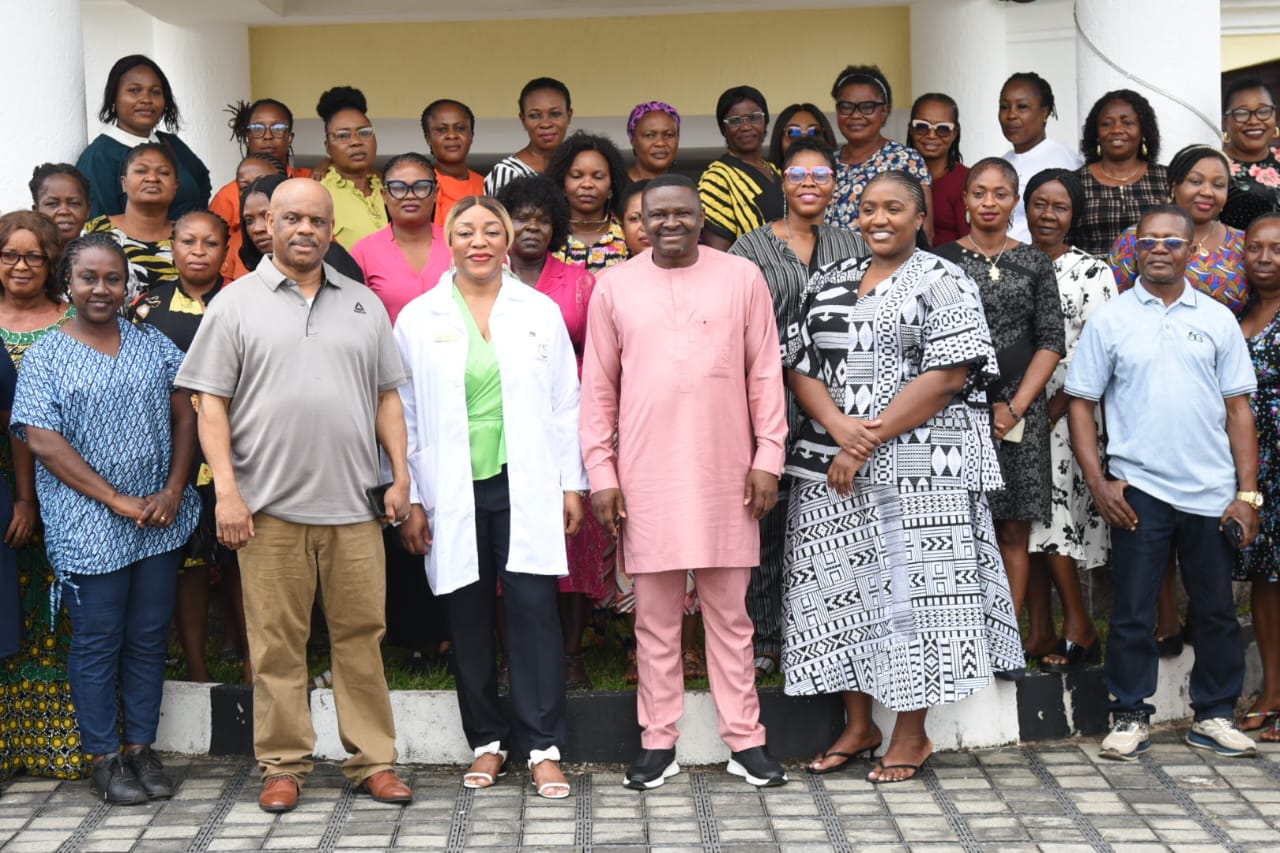
The Abia State Government on Tuesday, commenced a Statewide Basic Life Support (BLS) training programme for Health Professionals, to reduce preventable deaths and strengthen emergency response across Primary Healthcare Centers in the State.
The programme, sponsored by the State Government in collaboration with the Abia State Diaspora Commission, targets frontline Health workers and is designed to equip them with practical, life-saving skills, particularly in Cardiopulmonary Resuscitation (CPR) and emergency care.
Speaking at the opening session in Umuahia, the Commissioner for Health, Prof. Enoch Uche, said the training reflects the determination of Governor Alex Otti to protect lives by prioritising continuous training and capacity development for health-care workers particularly at the grassroots.
Professor Uche explained that the present administration is charting a new course for the Health Sector by ensuring that human resources are adequately equipped with practical, life-saving skills to deliver quality care wherever they are deployed.
He described the participants as the pioneer batch, tasked with cascading the knowledge and skills acquired to colleagues in their respective health facilities.
“We want to make sure that our people are protected and are held in. His Excellency has taken it upon himself to chart that course and to insist that our people will have, especially those that are involved in human resources for health, enough capacity to take care of people where they are working”, Prof Uche explained.
He urged participants to take the programme seriously, noting that they were the first set who would be expected to cascade the skills to colleagues in their respective facilities.
Prof Uche said the training will be complemented with internationally recognised certification and the deployment of modern emergency equipments to Primary Healthcare Centers and general hospitals, to guarantee effective application of the skills learnt.
“With the certification and then with the tools that are being provided at the Primary Healthcare Centers and the General Hospitals, you can now practise what you are learning.
“It will not be a situation where you learn something and go back without the tools to practise them”, he said.
The Commissioner described the skills being taught as critical, stressing that they could mean “the difference between life and death”.
He recounted a personal account of losing a colleague to cardiac arrest due to the absence of basic emergency facilities and trained personnel in rural Health Centres.
Professor Uche stressed that such avoidable deaths informed the resolve of the Abia State Government to ensure that no resident loses their life due to lack of basic emergency care, especially in rural areas.
“The man died because we didn’t have the simple facilities to take care of people with cardiac arrest in the rural areas and that is why His Excellency has said that it should not happen in Abia State. That is why we are here”, the Commissioner noted.
He emphasised that beyond the provision of modern equipment, training, adequate human resources and proper organisation are critical in the Health Sector noting that the considerations necessitated the State’s partnership with Stakeholders.
He urged participants to count themselves privileged, describing the skills being taught as essential for every Healthcare Professional.
Also speaking, the Chairman of the Abia State Diaspora Commission, Mr Okechukwu Agbara, said the initiative reflects the the present administration’s understanding that “a healthy nation is a wealthy nation,” and commended Governor Otti for prioritising Healthcare of it’s citizens.
Agbara who underscored the importance of CPR and effective emergency response, recalled witnessing an emergency incident where individuals required urgent attention.
He described the training as timely and critical noting that such skills are mandatory for Healthcare Professionals in many countries.
He explained that the collaboration with the Diaspora Commission was designed to bring global best practices in healthcare to Abia State and urged participants to pay close attention and master the cardiopulmonary resuscitation techniques, chest compressions and resuscitation procedures.
Earlier, Assistant Professor of Family Medicine and Training Lead, Dr Odinaka Anyanwu (USA), alongside Dr Nnenna Ihekoromadu, Founder of Quantus Medical Foundation, Texas, USA, said the BSL training is expected to improve emergency response at the grassroots, enhance patient survival rates and advance the Otti led administration’s Healthcare reforms.
The training featured practical sessions on emergency and life-saving techniques.