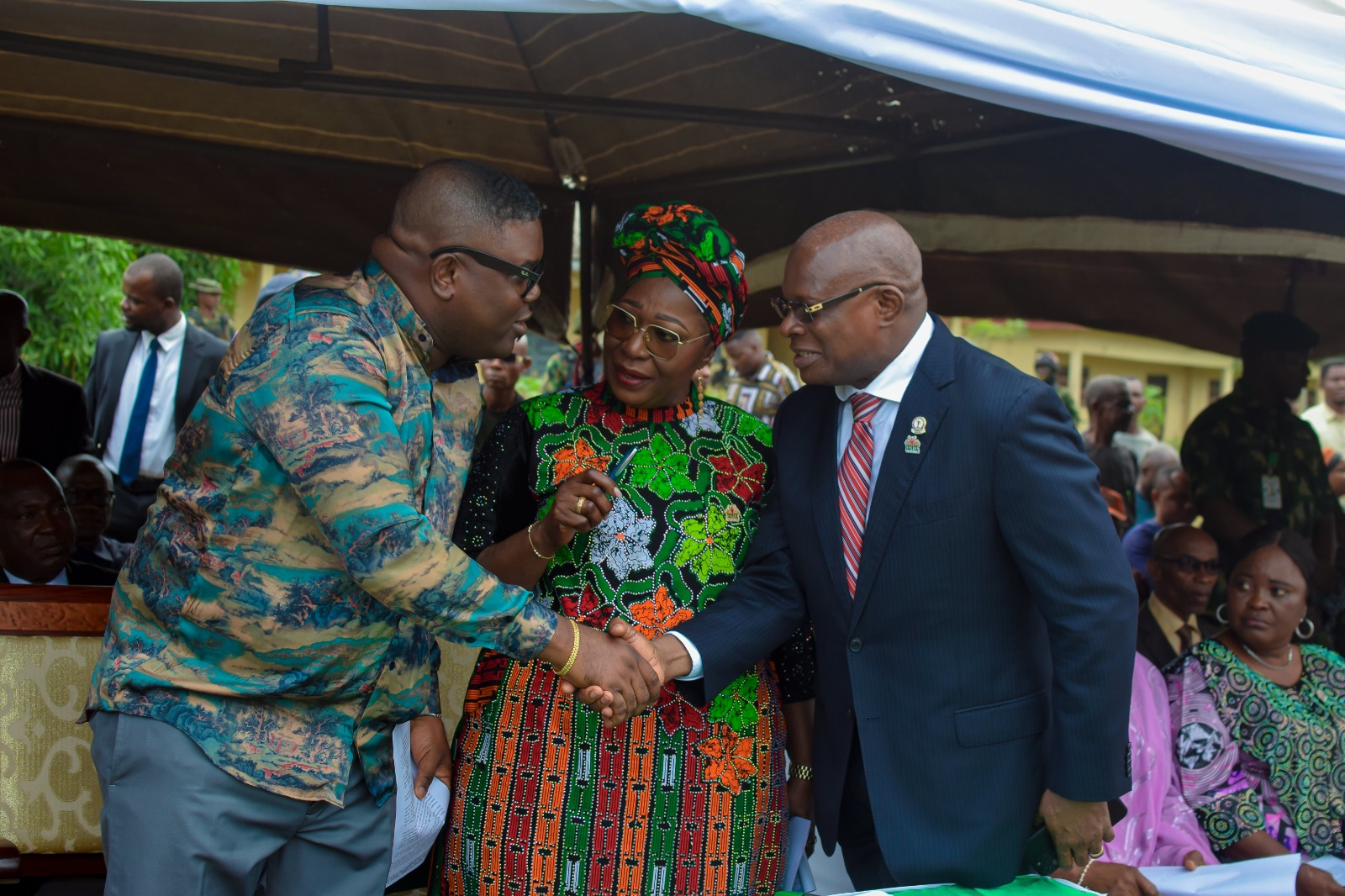
The Deputy Governors of Abia and Akwa Ibom States have jointly stepped in to restore peace between the people of Akirika Obu in Ukwa East Local Government Area of Abia State and Ikot Udo in Ika Local Government Area of Akwa Ibom State. The intervention is aimed at ensuring peace and allowing the ongoing road construction project in the area to continue without interruption.
Speaking at a peace meeting held at Akirika Obu, the Abia State Deputy Governor, Engr. Ikechukwu Emetu, urged both communities to embrace peace so that the road project could be completed smoothly.
Engr. Emetu made it clear that the meeting was not meant to decide land ownership or boundary issues, explaining that such matters fall under the responsibility of the National Boundary Commission. He said the major concern of both state governments is the successful completion of the road project for the benefit of the people.
“We are not here to determine boundaries. That is the duty of the National Boundary Commission,” he said. “Our concern is that this road is completed because once the road is tarred, development and prosperity will follow.”
The Deputy Governor revealed that both Abia and Akwa Ibom State Governments have approved the road construction from their respective ends, noting that the two sections will meet at the disputed area, pending official boundary demarcation.
He appealed to the communities to live peacefully, reminding them of their long-standing social and cultural ties. “You intermarry and live together. Why fight over land that you will one day leave behind?” he asked.
Engr. Emetu commended the security agencies for maintaining peace and warned troublemakers to desist from actions capable of disrupting harmony. He assured that both state governments would no longer tolerate any act that threatens peace and development in the area.
Earlier, the Deputy Governor of Akwa Ibom State, Senator (Dr.) Akon Etim Eyakenyi, also called on all stakeholders to embrace peace and allow the road project to proceed without hindrance.
She stressed that development cannot take place without good road infrastructure and explained that the intervention of both governments was purely to promote peace, progress, and shared prosperity. She also praised the Governors of Abia and Akwa Ibom States for their commitment to development and inter-state cooperation.
In his remarks, the Commander of the 14 Brigade of the Nigerian Army, Ohafia, Brigadier General Hassan M. Bello, said the presence of the military in the area was solely to ensure security and support peaceful dialogue. He downplayed the boundary dispute, noting that the two communities share common cultural and family ties.
He emphasized that the Nigerian Army was not deployed to determine boundaries but to support and enforce peaceful resolutions reached by the appropriate authorities. He warned that any attempt to disrupt peace would be firmly handled, adding that the Chief of Army Staff fully supports the peace process.
Brigadier General Bello urged all parties to cooperate with constituted authorities and see the road project as a shared development that will benefit everyone, regardless of future boundary decisions.
In their separate remarks, the Mayor of Ukwa East Local Government Area, Chief Chibunna Akara, and his counterpart in Ika Local Government Area, Hon. Utibe Nwoko, appealed to their communities to give peace a genuine chance and allow the road construction to continue.
They stressed that the project is meant for the collective good and should not be disrupted.
The peace meeting, which was attended by government officials from both states, community leaders, and security personnel, marked a major step toward strengthening inter-state cooperation and ensuring lasting peace and sustainable development in the area.