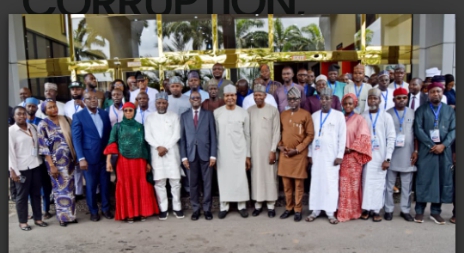
Stakeholders from Nigeria’s media sector, anti-corruption agencies, and civil society organizations have emphasized the need for a stronger and more proactive media role in the country’s fight against corruption.
The call was made during a one-day national workshop convened to review progress on the National Anti-Corruption Strategy (2022–2026) and examine how the media, often referred to as the Fourth Estate, can contribute more effectively to promoting transparency and accountability.
Participants at the workshop noted that the battle against corruption cannot rely solely on arrests and prosecutions, stressing that the media has a crucial role in exposing systemic weaknesses and preventing corrupt practices before they occur.
They observed that corruption persists not only because of weak enforcement mechanisms but also due to systemic inefficiencies, limited transparency, and negative societal attitudes toward accountability.
While acknowledging that Nigeria has established a robust anti-corruption framework, the stakeholders pointed out a growing disconnect between government efforts and public perception. They attributed this gap to weak coordination among agencies, political interference, limited public awareness, and delays within the judicial system.
The participants also expressed concern over what they described as the limited focus on preventive journalism. According to them, many media reports concentrate largely on arrests and high-profile corruption scandals, rather than investigating the systemic loopholes that enable corrupt practices.
They further highlighted the need for journalists to make greater use of modern investigative tools such as digital forensics and artificial intelligence to uncover complex corruption networks.
To strengthen collaboration between the media and anti-corruption institutions, the workshop recommended the establishment of dedicated media liaison desks within relevant agencies to facilitate timely access to accurate information and support fact-based reporting.
Stakeholders also called for stronger legal protection and incentives for journalists and whistleblowers, noting that fear of intimidation or retaliation often discourages individuals from exposing corruption.
In addition, they advocated sustained capacity-building programmes to equip journalists with deeper knowledge in public finance, governance ethics, and accountability reporting.
Participants urged the media to shift from what they described as “prosecution-driven” coverage to prevention-oriented reporting that identifies corruption risks and highlights reforms before public resources are misused.
They also appealed to the National Assembly to expedite the passage of comprehensive whistleblower protection legislation to encourage citizen participation and safeguard individuals who report corrupt activities.
As part of the resolutions reached at the workshop, participants proposed the establishment of a joint monitoring committee comprising representatives from government, the media, and civil society organizations to track the implementation of the National Anti-Corruption Strategy through quarterly reviews up to 2026.
While commending the efforts of anti-corruption agencies, the stakeholders warned that inadequate funding could undermine their operations and called on the Federal Government to ensure sustained financial support.
They concluded that a free, protected, and well-trained media remains essential to achieving lasting progress in the fight against corruption in Nigeria.