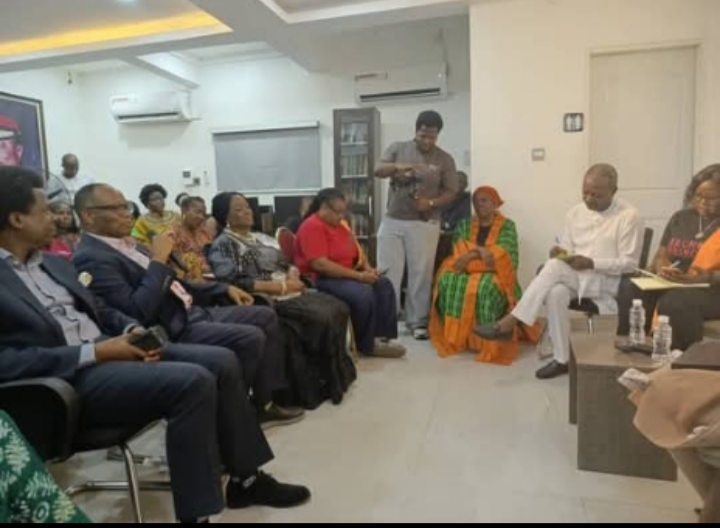
Stakeholders have renewed calls for increased representation of women in leadership and decision-making positions across Nigeria, stressing that sustainable national development cannot be achieved without gender inclusivity.
The call was made during the SALTi Conversations Series organised by the Strategic Action for Leadership Trust Initiative in collaboration with the Nigeria Association of Women Journalists (NAWOJ), Zone D, under the theme “Why Nigeria Needs More Women at the Table.” The event was held in Abuja.
Speaking at the event, the Deputy Editor of Blueprint Newspapers and NAWOJ Vice President, Zone D (North Central), Chizoba Ogbeche, identified structural, financial and systemic barriers as major impediments to women’s participation in leadership.
Ogbeche emphasised the need for deliberate action and a shift in societal orientation, noting that although women play significant roles during political campaigns, they are often excluded from decision-making processes.
“Beyond discussions, we must be intentional and change our orientation. During campaigns, women are actively involved in mobilisation, yet they are rarely in positions to dictate terms,” she said.
She further noted that while many women are willing to contest leadership positions, access to party tickets remains a major challenge due to financial constraints.
“It is not that women lack the capacity to run, but how many can actually secure party tickets? Financial limitations remain a major barrier,” she added.
Ogbeche also observed that although many political parties have constitutional provisions supporting women’s inclusion, implementation has remained weak.
“Most parties have inclusion provisions on paper, but in practice they are often ignored. Women must push further, and litigation is one of the tools we should consider,” she said, adding that pro bono legal support could help enforce accountability within party structures.
She also highlighted the dominance of men in policy-making spaces, noting that the imbalance continues to shape governance outcomes.
“The reality is that policy-making bodies are largely male-dominated, and this influences decisions. We must intensify advocacy to change this narrative,” she stated.
Participants at the event identified political violence, limited financial resources and entrenched societal norms as key factors discouraging women from pursuing leadership roles.
They called for deliberate policy implementation, stronger advocacy frameworks and grassroots sensitisation to promote gender equality and empower more women to actively participate in governance.
The stakeholders agreed that sustained engagement, institutional reforms and collective action are essential to bridging the gender gap and ensuring more inclusive leadership in Nigeria.