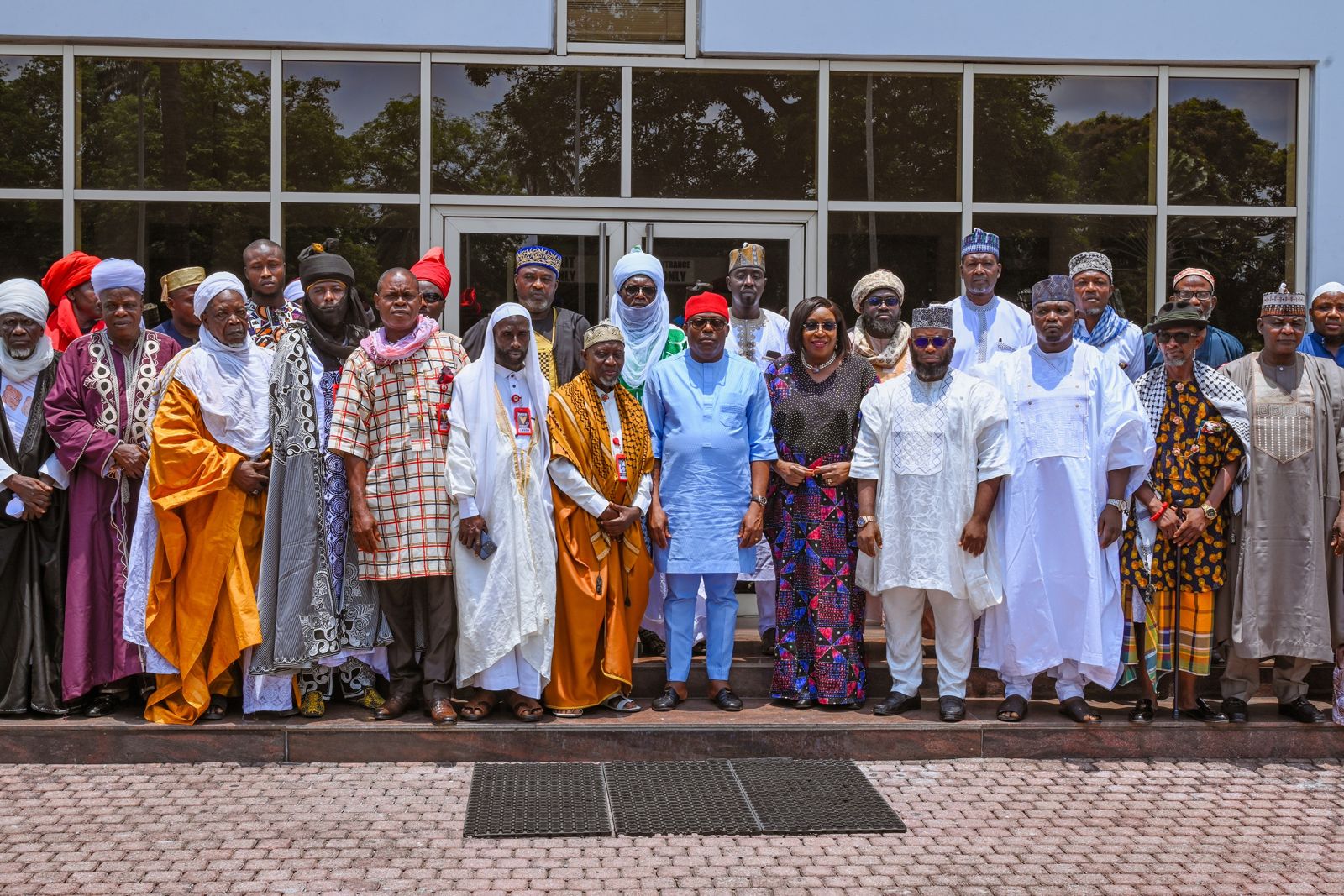
Governor of Rivers State, Siminalayi Fubara, has revealed that his administration adopted a discreet, behind-the-scenes approach to manage and contain herders–farmers conflicts, while calling for sustained peaceful coexistence among residents.
Fubara made this known on Friday at Government House when he received a delegation of Muslim faithful led by the Vice-President General of the Rivers State Council for Islamic Affairs, Alhaji Nasir Uhor, as part of activities marking Eid al-Fitr.
Speaking during the visit, the governor emphasised the need for collaboration between government and community leaders to sustain peace, particularly in addressing tensions between herders and farmers. He noted that the situation in Rivers differs from other parts of the country due to proactive engagement and conflict-management strategies implemented by his administration.
According to him, ongoing consultations with security agencies and key stakeholders have helped to minimise casualties and prevent escalation of the crisis. He reiterated the government’s commitment to protecting lives and property, regardless of ethnic or religious affiliations.
Fubara also urged Muslim leaders and other stakeholders to establish internal mechanisms to sensitise their members on lawful conduct and peaceful living. He stressed that all residents, irrespective of origin, should be regarded as part of the Rivers community.
The governor further assured the delegation that their requests would be considered within available resources, reaffirming his administration’s commitment to maintaining cordial relations with the Muslim community.
Earlier, Uhor commended the governor for promoting religious inclusivity and supporting Muslim activities, including pilgrimage. He appealed for government assistance in constructing an ultra-modern central mosque in Port Harcourt, the return of the Muslim section of the Port Harcourt cemetery to the council, and the allocation of land for a mosque at the state university, citing a Supreme Court ruling affirming the rights of Muslim students.
The visit highlighted ongoing efforts by the state government to strengthen interfaith harmony and promote peaceful coexistence across communities.