The Independent National Electoral Commission (INEC) has expressed concern over leadership crises, infighting, and unnecessary litigation affecting some political parties in Nigeria.
The Commission stated that it would strictly enforce its regulations and guidelines for political parties, particularly during party primaries.
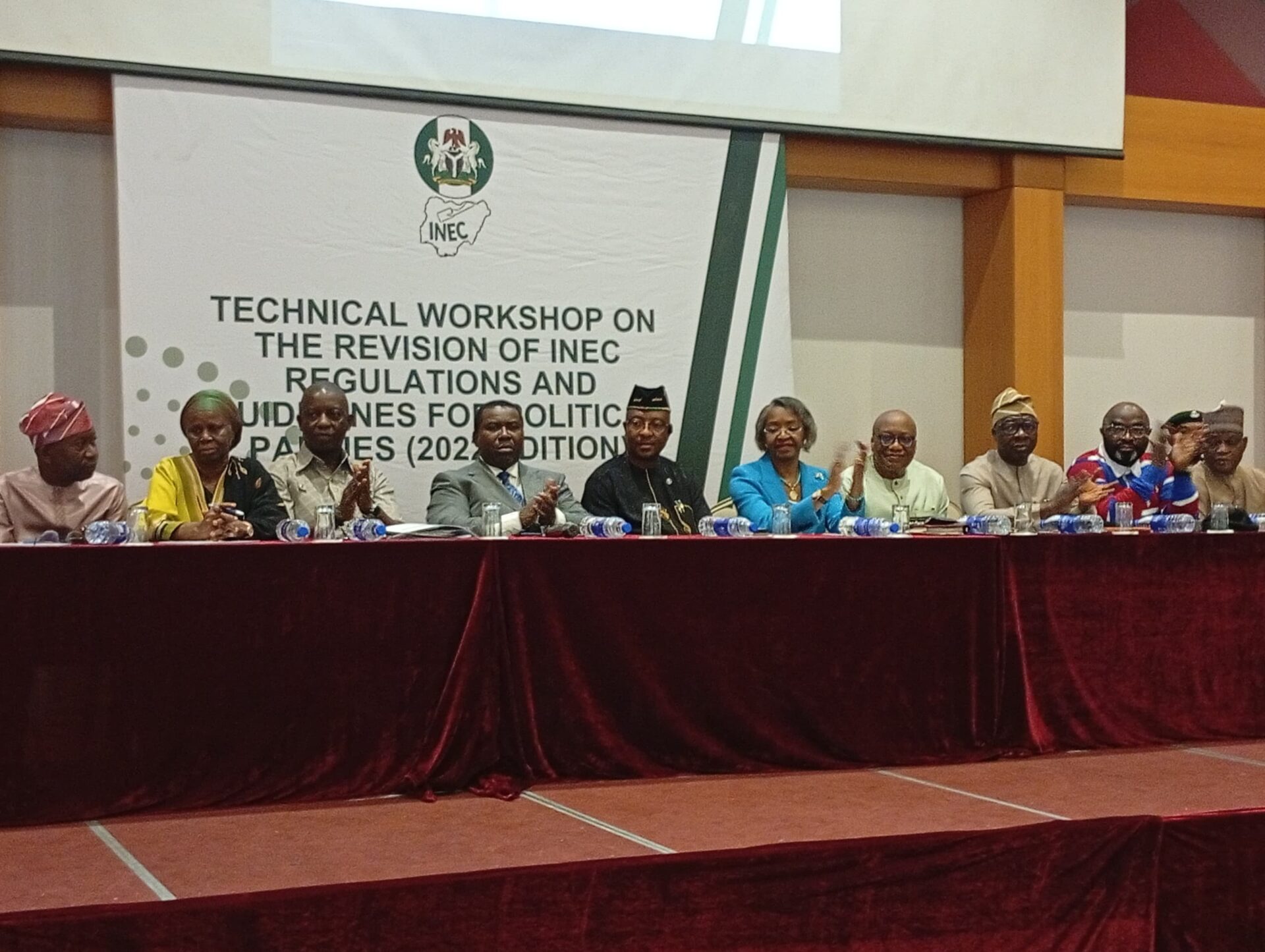
INEC Chairman, Professor Joash Amupitan, SAN, made this known in Ikot Ekpene, Akwa Ibom State, at the opening of a technical workshop on the review of INEC Regulations and Guidelines for Political Parties. The workshop was organised by the Commission in partnership with the Westminster Foundation for Democracy on Wednesday.
The Chairman disclosed that the 2026 guidelines would introduce stricter benchmarks for membership documentation, financial transparency, and the inclusion of women, youth, and Persons with Disabilities (PWDs).
He lamented that political parties, rather than serving as vehicles for national transformation, are increasingly embroiled in leadership squabbles and internal crises, threatening to turn them into theatres of perpetual strife. He noted that the Commission is prepared to address these challenges through the revised guidelines.
According to him, a day spent defending intra-party disputes in court “is a day diverted from the Commission’s primary mandate of election planning.”
He stated in part
“Our collective commitment is being challenged by leadership squabbles and judicialised politics. In the last electoral cycle alone, INEC was joined in scores of suits that could have been avoided through simple adherence to party constitutions. As an independent body, we remain neutral, but we are no longer passive observers.
Political parties in Nigeria are facing a crisis of internal democracy. Of grave concern is the quality of party primaries. As we move towards the primary window of April 23 to May 30, 2026, we must enforce a level playing field. The quality of internal party democracy has a direct bearing on the general elections conducted by INEC.
We are informing all stakeholders that while INEC remains a neutral umpire, we are fully committed to enforcing the rules to ensure that the sovereign will of the Nigerian people remains sacrosanct. The 2026 Regulations must be devoid of ambiguities. Let us build a framework that protects the sovereign will of the Nigerian people from candidate nomination to the final declaration of results.”
In his goodwill message, the Country Director of the Westminster Foundation for Democracy, Mr Adebowale Olorunmola, emphasised the need to strengthen the guidelines and regulations to give full effect to the Electoral Act, noting that changes introduced in the new Electoral Act necessitate updates to the Commission’s framework.
“The 2022 edition of the INEC Regulations and Guidelines served us well during the 2023 general elections and subsequent polls. However, current realities are no longer what they were four years ago. Today, we are tasked with bridging the gap between the letter of the 2026 Act and the practical, day-to-day operations of our political parties.”
Earlier, in his welcome remarks, the Resident Electoral Commissioner in Akwa Ibom State, Obo Efanga, described the workshop as strategic and significant. He noted that the review and update of the 2022 Regulations and Guidelines for Political Parties could not have come at a better time.
He added that the workshop was designed to examine the implications of the Electoral Act 2026 on the Commission’s regulations and guidelines for various electoral activities.