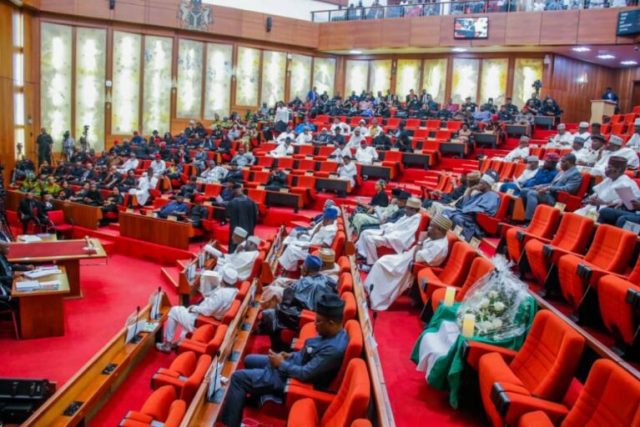
The Senate has taken a significant step toward strengthening Nigeria’s social protection out framework with the passage of a bill seeking to reduce extreme poverty through the establishment of Social Welfare Service Centres across the country.
The bill, sponsored by Senator Orji Uzor Kalu, scaled second reading last ,Thursday after receiving unanimous support from lawmakers. It aims to harmonise and boost existing welfare interventions by creating a centralised, data-driven structure to coordinate social support programmes.
Leading debate on the floor, Senator Kalu described poverty as one of the nation’s most stubborn and enduring challenges.
He noted that despite multiple interventions over the years, millions of Nigerians still struggle to access basic necessities due to what he termed “the absence of a unified institution capable of managing and monitoring welfare programmes effectively.”
Under the proposal, a new Social Welfare Service Department would be created under the Ministry of Humanitarian Affairs, with dedicated offices in all 36 states and the Federal Capital Territory.
This, he said, would ensure that welfare initiatives are implemented at the grassroots and not limited to Abuja.
The department would oversee a wide range of programmes, including foodSenate Advances Bill to Tackle Extreme Poverty Through Nationwide Service Centres
The Senate has taken a significant step toward strengthening Nigeria’s social protection framework with the passage of a bill seeking to reduce extreme poverty through the establishment of Social Welfare Service Centres across the country.
The bill, sponsored by Senator Orji Uzor Kalu, scaled second reading on Thursday after receiving unanimous support from lawmakers. It aims to harmonise and boost existing welfare interventions by creating a centralised, data-driven structure to coordinate social support programmes.
Leading debate on the floor, Senator Kalu described poverty as one of the nation’s most stubborn and enduring challenges. He noted that despite multiple interventions over the years, millions of Nigerians still struggle to access basic necessities due to what he termed “the absence of a unified institution capable of managing and monitoring welfare programmes effectively.”
Under the proposal, a new Social Welfare Service Department would be created under the Ministry of Humanitarian Affairs, with dedicated offices in all 36 states and the Federal Capital Territory. This, he said, would ensure that welfare initiatives are implemented at the grassroots and not limited to Abuja.
The department would oversee a wide range of programmes, including food and cash transfers, education stipends, housing support, subsidies for marginal farmers, credit facilities, and allowances for the elderly and persons living with disabilities.
A key provision of the bill is the establishment of Safety Centres nationwide, along with a national register of beneficiaries and programme graduates. This database is expected to enhance accountability, curb corruption, and track long-term outcomes.
The bill also spells out strict eligibility requirements for beneficiaries, such as households earning below ₦5,000 monthly, day labourers making less than ₦3,000 per job, low-income artisans, subsistence farmers, and residents of slum communities. Senator Kalu said these criteria were designed to prevent political interference and ensure assistance reaches those who need it most.
Lawmakers praised tI efficiencies stressing the urgency of eliminating leakages and inefficiencies that have plagued previous welfare schemes.
The bill has been referred to the Senate Committee on Public Service, which is expected to report back within four weeks. and cash transfers, education stipends, housing support, subsidies for marginal farmers, credit facilities, and allowances for the elderly and persons living with disabilities.
A key provision of the bill is the establishment of Safety Centres nationwide, along with a national register of beneficiaries and programme graduates. This database is expected to enhance accountability, curb corruption, and track long-term outcomes.
The bill also spells out strict eligibility requirements for beneficiaries, such as households earning below ₦5,000 monthly, day labourers making less than ₦3,000 per job, low-income artisans, subsistence farmers, and residents of slum communities. Senator Kalu said these criteria were designed to prevent political interference and ensure assistance reaches those who need it most.
Lawmakers praised the initiative, stressing the urgency of eliminating leakages and inefficiencies that have plagued previous welfare schemes.
The bill has been referred to the Senate Committee on Public Service, which is expected to report back within four weeks.